English
 عربى
عربى BLDC
BLDC

Content
- 1 Why Aluminium Has Become the Go-To Material for Modern Building Facades
- 2 The Main Types of Aluminium Facade Systems
- 3 Aluminium Facade System Comparison
- 4 Surface Finishes and Coatings: What Determines Long-Term Appearance
- 5 Thermal Performance and Energy Efficiency in Aluminium Facade Design
- 6 Fire Performance Requirements for Aluminium Facades
- 7 Key Specification Decisions Before You Approach Suppliers
Why Aluminium Has Become the Go-To Material for Modern Building Facades
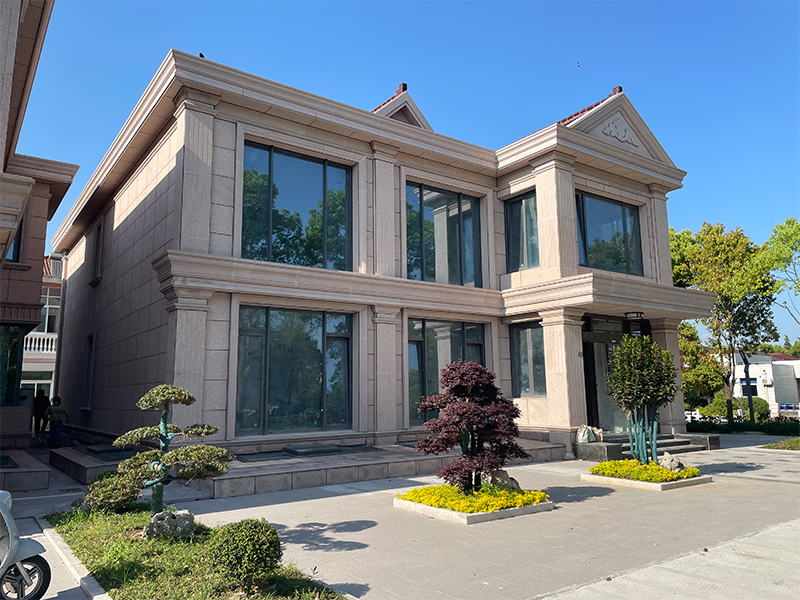
Aluminium facade systems now dominate the external envelope of commercial, institutional, and high-rise residential buildings across virtually every major construction market, and the reasons go well beyond aesthetics. Aluminium offers a combination of properties that competing facade materials — steel, glass, concrete, and timber — cannot match simultaneously: it is lightweight at roughly one-third the density of steel, inherently corrosion-resistant without additional protective treatment, infinitely formable into complex profiles and geometries, and fully recyclable at the end of its service life without loss of material quality. These characteristics make it not just a practical building material but an economically and environmentally compelling one across the full project lifecycle.
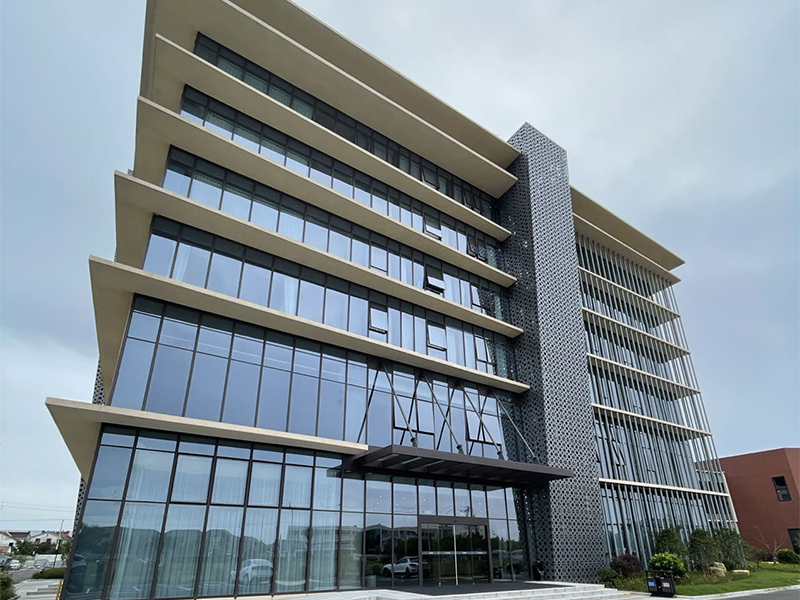
The architectural flexibility aluminium provides has also driven its adoption. A modern aluminium facade can be flat or deeply profiled, matte or mirror-polished, standard silver or any colour in the RAL or NCS spectrum, perforated or solid, and formed into curves, angles, and overhangs that would be structurally or economically impractical in heavier materials. This design freedom, combined with the material's structural performance and low maintenance requirements over decades of service, explains why aluminium has become the default specification for architects and facade engineers working on projects where both performance and visual impact matter.
The Main Types of Aluminium Facade Systems
Aluminium facade is not a single product — it is a broad category covering several distinct system types, each suited to different building types, performance requirements, and budgets. Understanding the main systems and what differentiates them is essential before engaging with suppliers or facade consultants, since system selection shapes every downstream decision from structural design to thermal detailing.
Aluminium Curtain Wall Systems
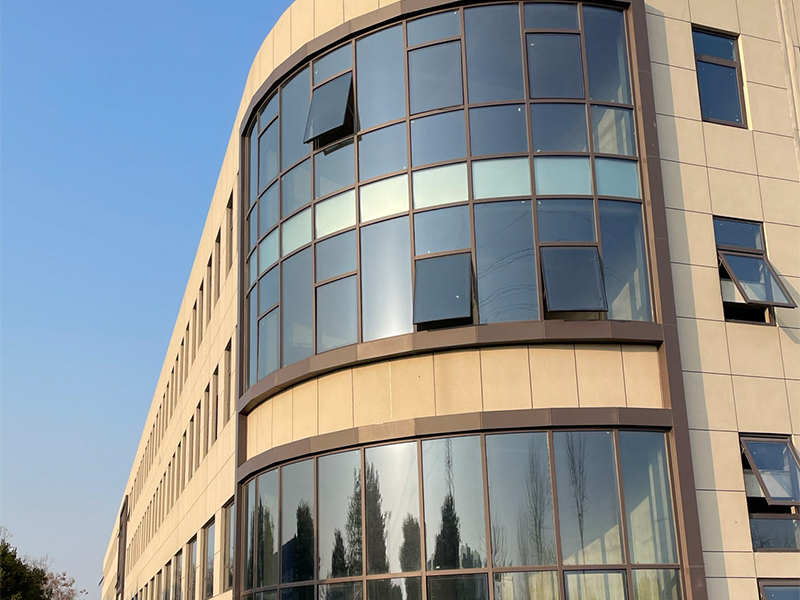
Curtain wall is the most structurally sophisticated aluminium facade system — a non-load-bearing external skin hung from the building structure that spans multiple floors and carries its own wind and gravity loads back to the primary structure at floor level connections. The aluminium framework consists of vertical mullions and horizontal transoms forming a grid into which glass panels, opaque spandrel panels, or aluminium infill panels are set and sealed. Curtain wall systems are classified as either stick systems — where individual mullion and transom extrusions are assembled on-site piece by piece — or unitised systems, where factory-assembled panels covering one or more bays are craned into position and interlocked on site. Unitised curtain wall is faster to install and offers tighter quality control since most assembly happens in factory conditions, but it requires more precise structural coordination and higher upfront fabrication investment. Stick systems are more flexible for complex geometries and smaller projects where unitisation is not economically justified.
Aluminium Rainscreen Cladding
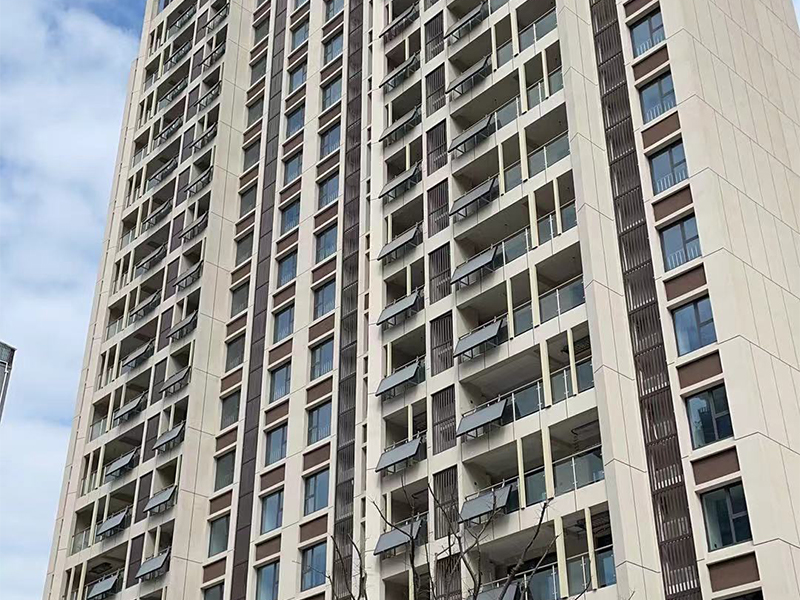
Rainscreen cladding systems use aluminium panels fixed to a subframe that stands off from the building's primary wall construction, creating a ventilated cavity between the panel back face and the wall surface behind. This cavity is the defining functional feature: it allows any moisture that penetrates behind the panel face to drain out at the base and the air movement within the cavity accelerates drying, preventing moisture accumulation in the insulation and wall structure. Rainscreen systems are used extensively on concrete, masonry, and steel-frame buildings as a way of improving weather resistance and thermal performance without changing the primary structure. The aluminium panels themselves can be solid sheet, cassette format, or composite panel, and the subframe is typically aluminium or hot-dip galvanised steel depending on the exposure and span requirements. Rainscreen facade systems are among the most versatile in the market — they accommodate a very wide range of panel materials, profiles, and fixing methods within the same basic system logic.
Aluminium Composite Panel (ACP) Facades
Aluminium composite panels consist of two thin aluminium sheet faces bonded to a core material — typically a mineral-filled or polyethylene core — producing a lightweight, rigid, and flat panel that is easy to fabricate and install. ACP facades are widely used in commercial and retail buildings for their cost-effectiveness, the consistency of their flat surface finish, and the ease with which large panel areas can be achieved without visible fixings. The fire performance of ACP is a critical specification point: panels with polyethylene cores have been implicated in rapid fire spread on high-rise buildings and are now subject to strict restrictions or outright prohibition in many markets for use above certain building heights. Mineral-filled or FR (fire-retardant) core panels offer significantly improved fire performance and are the appropriate specification for any multi-storey application. Always confirm the core material and its fire classification against the building regulations applicable in your jurisdiction before specifying ACP.
Solid Aluminium Panel Systems
Solid aluminium facade panels — typically 3mm to 6mm thick single-skin aluminium sheet, often stiffened with welded or bonded ribs on the back face — offer a premium alternative to composite panels where fire performance, durability, and long-term finish quality justify the higher material cost. Solid panels can be formed into complex three-dimensional shapes — curved, tapered, faceted — that composite panels cannot easily achieve due to their layered construction. They are the standard specification for landmark facade projects where visual quality and design precision are paramount, and their all-metal construction eliminates the core-related fire performance concerns that affect ACP. Solid aluminium panels are typically fabricated from 5000-series or 3000-series aluminium alloys for their combination of formability, weldability, and corrosion resistance, and finished with PVDF coating for maximum colour stability and weathering performance over the building's life.
Aluminium Facade System Comparison
| System Type | Primary Use | Fire Performance | Design Flexibility | Relative Cost |
| Curtain Wall | High-rise, commercial | High (all-metal frame) | High | High |
| Rainscreen Cladding | Mid-rise, retrofit | Depends on panel type | Very High | Medium |
| ACP (FR core) | Commercial, retail | Medium-High (FR core) | Medium | Low-Medium |
| Solid Aluminium Panel | Landmark, premium | High (all-metal) | Very High | High |
Surface Finishes and Coatings: What Determines Long-Term Appearance
The finish applied to an aluminium facade panel is what the building owner and occupants see every day, and it is what protects the aluminium surface from weathering, UV degradation, and surface contamination over decades of exposure. Finish selection is one of the most consequential specification decisions in facade design, and the differences between finish types in durability and colour retention are substantial enough to justify careful evaluation.
PVDF Coatings
Polyvinylidene fluoride (PVDF) coating — applied by coil coating or spray application and oven-cured — is the performance benchmark for architectural aluminium finishes. PVDF coatings typically contain 70% PVDF resin by weight in the colour coat, which gives them exceptional resistance to UV degradation, chalking, colour fade, and chemical attack from atmospheric pollutants and cleaning agents. Leading PVDF coating systems carry warranties of 20–30 years for colour and gloss retention when applied to properly pre-treated aluminium — a service life expectation that is difficult to match with any alternative finish technology. For facades on buildings in urban, coastal, or industrial environments where atmospheric aggression is higher, PVDF is generally the appropriate default specification. The range of colours and finishes available in PVDF — including metallic effects, textured surfaces, and wood-effect prints — has expanded significantly, making finish limitations less of a constraint than they were historically.
Anodising
Anodising is an electrochemical process that converts the aluminium surface into a hard, porous aluminium oxide layer that is integral to the metal rather than applied on top of it. The anodised layer cannot peel or flake, and when sealed correctly it provides excellent corrosion resistance and a distinctively deep, metallic appearance that paint coatings cannot replicate. Architectural anodising for facade applications is typically specified at 20–25 microns thickness (AA20 or AA25 class), which provides durability appropriate for exposed building exteriors. The colour range available in anodising is more limited than paint — natural silver, champagne, bronze, and black are the standard architectural options, with some suppliers offering extended ranges — and colour consistency across large batches can be more variable than coil-coated paint. For projects where the authentic metallic character of anodised aluminium is an architectural priority, the finish is unmatched; for projects requiring precise colour matching or a wide colour palette, PVDF paint is more practical.
Powder Coating
Powder coating applies a dry thermosetting polymer powder to the aluminium surface electrostatically and cures it in an oven, producing a tough, seamless coating with good impact resistance and a wide colour range at lower cost than PVDF. Standard polyester powder coatings are adequate for many architectural applications, but their UV and weathering resistance is substantially lower than PVDF — colour fade and chalking become visible after 10–15 years of exterior exposure in most climates, compared to 25+ years for quality PVDF systems. Super-durable powder coatings using TGIC-free polyester or polyurethane chemistry offer improved weathering performance and represent a reasonable middle ground between standard polyester and PVDF in terms of both performance and cost. For low-rise or sheltered applications where the facade is not exposed to direct weathering on all faces, standard powder coating is often a cost-appropriate specification; for full-exposure facades on multi-storey buildings, PVDF is the more defensible long-term choice.
Thermal Performance and Energy Efficiency in Aluminium Facade Design
Aluminium is an excellent thermal conductor — a property that is useful in heat exchangers and radiators but problematic in building envelopes, where heat transfer through the facade contributes directly to heating and cooling loads and energy consumption. Unaddressed thermal bridging through aluminium curtain wall mullions and cladding subframes is one of the most significant energy performance challenges in facade engineering, and managing it effectively requires deliberate design rather than assuming the insulation layer alone will be sufficient.
In curtain wall systems, thermal break technology — incorporating a low-conductivity polyamide or polyurethane strip between the inner and outer aluminium sections of each mullion and transom — is the standard approach to interrupting the conductive path through the frame. The width and material of the thermal break, combined with the glazing unit specification, determines the overall U-value of the curtain wall system. Modern thermally broken curtain wall systems can achieve overall U-values of 1.0–1.4 W/m²K, which meets the energy performance requirements of most current building regulations in temperate climates, though high-performance projects targeting Passivhaus or near-zero energy standards require specialist systems with wider thermal breaks and triple-glazed units.
For rainscreen and panel facade systems, the thermal performance of the facade assembly depends primarily on the insulation layer within the wall construction behind the panel, with the cladding subframe fixings representing the main thermal bridge path. Minimising subframe fixing frequency and using thermally broken bracket systems where the fixing passes through the insulation layer are the key design measures for high-performance rainscreen assemblies. Thermal modelling of the facade system using validated software — not simplified U-value calculations that ignore linear and point thermal bridges — is necessary to accurately predict the as-built performance of any aluminium facade assembly on an energy-regulated project.
Fire Performance Requirements for Aluminium Facades
Fire performance has become one of the most scrutinised aspects of facade specification following a series of high-profile building fires in which external cladding systems contributed to rapid and widespread fire spread. Regulatory frameworks governing the fire performance of external wall systems have been significantly tightened in many markets since 2017, and compliance requirements now vary substantially by building height, occupancy type, and jurisdiction. Understanding the current requirements in your project's location is not optional — it is a fundamental pre-design obligation.
In the United Kingdom, the Building Regulations Approved Document B and the subsequent amendments following the Grenfell Tower Inquiry have introduced requirements for buildings over 18 metres in height that effectively mandate the use of non-combustible or limited combustibility materials in the external wall construction, including facade panels, insulation, and fixings. Aluminium itself is non-combustible, but the core materials in composite panels and the insulants used within the facade assembly must also meet the relevant classification. In most European markets, the EN 13501 classification system applies, with reaction-to-fire classes ranging from A1 (non-combustible) to F (no performance determined) — facade specifications for regulated buildings typically require A2-s1,d0 or better for all components of the external wall system.
- Always confirm the fire classification of every component in the facade assembly — panel, core, insulation, fixings, and sealants — not just the aluminium skin
- ACP with polyethylene cores is restricted or prohibited above 18 metres in most developed markets — specify FR or mineral-filled core as a minimum for any multi-storey application
- Request test evidence and third-party certification for fire performance claims — manufacturer declarations without independent test data are insufficient for regulatory compliance on regulated buildings
- System-level fire testing — where the complete facade assembly including subframe, insulation, panel, and fixings is tested together — is more reliable evidence of real-world performance than individual component classifications tested in isolation
Key Specification Decisions Before You Approach Suppliers
Aluminium facade procurement works best when the specification is well-defined before suppliers are engaged. Vague or incomplete specifications produce incomparable quotes, lead to value engineering that compromises performance, and create disputes during construction when product substitutions are proposed. These are the decisions worth resolving at design stage before the procurement process begins.
- System type: Curtain wall, rainscreen, ACP, or solid panel — the choice drives structural, thermal, and fire performance requirements and should be resolved before detailed design begins
- Alloy and temper: 6000-series alloys for extruded sections and curtain wall frames; 3000 or 5000-series for sheet and panel applications — confirm with the facade engineer based on structural and forming requirements
- Panel thickness and stiffening: Determined by wind load, span, and deflection limits — do not accept supplier-recommended minimum thicknesses without independent structural verification for your project's specific loading
- Finish specification: PVDF, anodising, or powder coat — specify coating class, minimum dry film thickness, and warranty requirements, not just colour reference
- Thermal performance target: Establish the required U-value for the facade assembly and confirm that the specified system with its thermal breaks and insulation achieves it through calculation, not assumption
- Fire classification requirements: Establish the applicable regulatory standard for your building type and height before selecting any products — confirm compliance documentation requirements with your building control authority
- Fixing and movement accommodation: Aluminium expands and contracts with temperature — facade systems must accommodate thermal movement through slotted fixings or floating joints, and this must be detailed correctly to prevent distortion and fixing failure over the building's life