English
 عربى
عربى BLDC
BLDC

Content
- 1 Why Aluminum Alloy Is the Dominant Material for Door Parts
- 2 Main Categories of Aluminum Alloy Door Parts
- 3 Aluminum Alloy Grades Used in Door Components
- 4 Surface Finishes for Aluminum Alloy Door Components
- 5 Common Problems with Aluminum Alloy Door Parts and Their Causes
- 6 How to Specify and Source Aluminum Alloy Door Parts Correctly
- 7 Maintenance Practices That Extend the Life of Aluminum Door Components
Why Aluminum Alloy Is the Dominant Material for Door Parts
Aluminum alloy has become the material of choice for door parts across residential, commercial, and industrial construction for reasons that go well beyond simple weight savings. The combination of properties that aluminum alloy delivers — corrosion resistance without surface treatment, high strength-to-weight ratio, excellent machinability and extrudability, and compatibility with a wide range of finishing processes — makes it uniquely well-suited to the demands placed on door components across their entire service life. A well-specified aluminum alloy door frame or hardware set installed correctly will outlast the building finishes around it by decades, requiring minimal maintenance compared to steel equivalents that rust, timber that warps and rots, or zinc die-cast hardware that corrodes and fatigues.
The versatility of aluminum alloy also matters commercially. The same base material can be extruded into complex profile geometries for frames and tracks, die-cast into intricate hardware shapes, machined to tight tolerances for precision fittings, or rolled into flat sheet for door skins and panels. This manufacturing flexibility means that the entire range of components in a door system — from the structural frame members to the handle, hinges, lock keep, threshold, and weather seal retainers — can be produced in compatible aluminum alloy grades with consistent visual appearance and predictable long-term performance. For architects, fabricators, and building owners, this consistency across an entire door system is a significant practical advantage over mixed-material assemblies.
Main Categories of Aluminum Alloy Door Parts
Aluminum alloy door components span a wide range of functional categories. Understanding what falls under each category helps when specifying a complete door system or sourcing individual replacement parts.
Structural frame and sash profiles
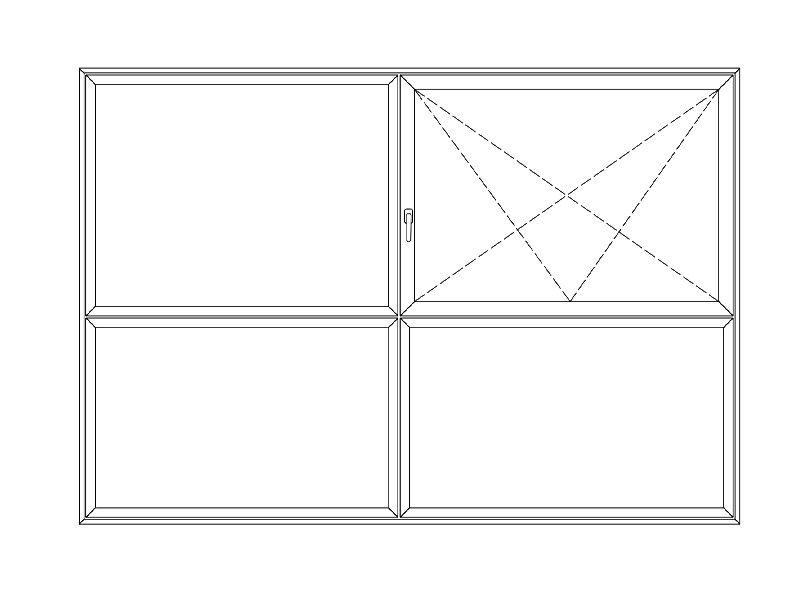
The frame and sash profiles are the primary structural components of an aluminum alloy door system. These are extruded sections — typically hollow or multi-chamber profiles — that form the door frame fixed to the opening, the door leaf frame (sash), and in the case of framed glazed doors, the intermediate members (transoms and mullions) that divide the glazed area. The profile geometry is engineered to provide the required structural stiffness, accommodate glazing or infill panels, house weather seals and gaskets, and interface with hardware fixings. Thermally broken profiles — which incorporate a polyamide or polyurethane thermal break between inner and outer aluminum sections — are the standard specification for external doors in buildings with thermal performance requirements, preventing the cold bridging that occurs in mono-material aluminum frames.
Aluminum door handles and lever sets
Door handles and lever sets in aluminum alloy are produced by die casting, extrusion, or a combination of both manufacturing processes. Die-cast aluminum handles allow complex ergonomic forms and decorative geometries that extrusion cannot produce, while extruded lever handles offer a cleaner, more architectural aesthetic suited to contemporary commercial interiors. The alloy used for die-cast hardware is typically from the 3xx series (Al-Si-Cu alloys) optimised for die casting fluidity and surface finish quality, while extruded handles use 6xxx series alloys for their combination of strength and anodising response. Handle sets for aluminum alloy doors must be specified with the correct backset, spindle length, and fixing centres to match the lock body and door profile — dimensions that vary between door system manufacturers and should be verified before ordering replacements.
Hinges and pivot hardware
Aluminum alloy hinges for doors range from standard butt hinges for light-duty internal doors to heavy-duty continuous (piano) hinges and concealed hinges for high-traffic commercial applications. For external aluminum alloy doors, stainless steel hinges are often preferred over aluminum for their superior fatigue resistance under high cycle counts, but purpose-designed aluminum hinges with stainless steel pins and reinforced knuckles are widely used in residential and light commercial applications. Pivot hardware — floor-spring pivots, top pivots, and intermediate pivots for heavy or tall doors — is typically manufactured in die-cast aluminum or zinc alloy housings with steel or stainless steel pivot pins and bearing assemblies, combining the corrosion resistance of aluminum with the fatigue life of steel in the most stressed components.
Lock bodies, keeps, and cylinder housings
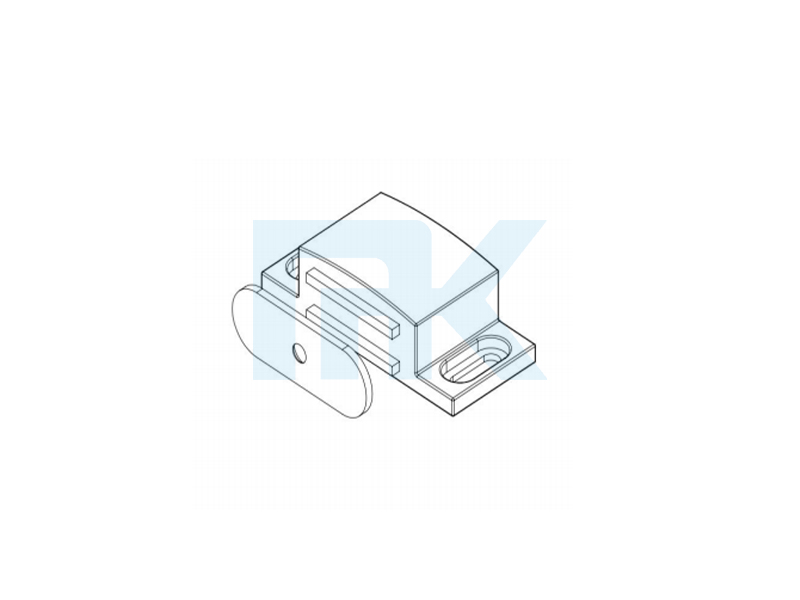
The lock body housing in an aluminum door is often die-cast aluminum, providing the structural case around the latch bolt, deadbolt, and multipoint locking mechanism components. The lock keep — the strike plate fixed in the door frame that receives the bolt — is a critical component that must be matched to the lock body geometry and fixed into the frame profile with sufficient structural engagement to meet the door's security rating. Aluminum alloy keeps and escutcheons are standard in aluminum door systems, though reinforced steel keeps are specified in security-rated door sets where forced entry resistance is a primary requirement. Cylinder housings and roses in aluminum alloy complete the cylinder installation and protect the interface between the cylinder and the door leaf from damage and forced entry attempts.
Thresholds and bottom rails
Aluminum alloy thresholds and bottom sealing systems are among the most functionally demanding door components, required to simultaneously provide weathertightness against driving rain and wind, accessibility compliance (limiting trip hazards to specified heights), thermal performance, and durability against foot traffic and cleaning chemicals. Extruded aluminum threshold profiles are designed with integral channels for brush seals, rubber gaskets, and drainage features, and are available in standard heights from fully flat (accessible) profiles to raised thresholds for high water exposure applications. Thermally broken threshold systems incorporate insulating strips to prevent cold bridging at the base of the door, which is otherwise a significant thermal weak point in the door assembly.
Sliding door tracks and rollers
For sliding aluminum alloy door systems — patio doors, bi-fold doors, and large-format sliding walls — the track and roller hardware is a distinct sub-category of aluminum door parts with its own specification requirements. The bottom track is typically an extruded aluminum profile with one or more running channels, surface-hardened or fitted with stainless steel inserts at the roller contact points to resist wear. Top tracks for top-hung sliding systems carry the full door weight on roller carriages and must be specified for the door leaf weight and operating frequency. Roller assemblies use precision bearings — typically stainless steel ball bearings in a die-cast aluminum or nylon housing — and their load rating and bearing quality are the primary determinants of how long a sliding door system operates smoothly before requiring adjustment or replacement.
Aluminum Alloy Grades Used in Door Components
The specific aluminum alloy used in a door component significantly affects its strength, corrosion resistance, machinability, and response to surface finishing. Different manufacturing processes used for different door parts require different alloy families.
| Alloy series | Main alloying elements | Manufacturing process | Typical door applications | Key properties |
| 6063 | Mg, Si | Extrusion | Frame profiles, sash, threshold, tracks | Excellent extrudability, good anodising quality, moderate strength |
| 6061 | Mg, Si, Cu | Extrusion, machining | Structural frame members, heavy-duty profiles | Higher strength than 6063, good machinability |
| 6082 | Mg, Si, Mn | Extrusion | High-load structural profiles, commercial door frames | Highest strength in 6xxx extrusion series |
| ADC12 / A380 | Si, Cu | Die casting | Handles, lock bodies, hinges, escutcheons | Excellent fluidity, good surface finish, moderate strength |
| 5052 | Mg, Cr | Rolling, sheet forming | Door skins, flat panels, cladding | Excellent corrosion resistance, good formability |
For most residential and light commercial aluminum alloy door frame applications, 6063-T5 or 6063-T6 is the standard specification — T5 indicating air-quenched and artificially aged after extrusion, T6 indicating water-quenched and artificially aged for higher strength. The T6 temper provides approximately 30% higher yield strength than T5 in 6063 alloy, which matters for wide-span structural profiles but is unnecessary for standard residential door frames where deflection under wind load rather than yield strength typically governs the design.
Surface Finishes for Aluminum Alloy Door Components
The surface finish of aluminum alloy door parts determines their visual appearance, corrosion performance, durability, and maintenance requirements. The main finishing options each have distinct characteristics and appropriate applications.
Anodising
Anodising is an electrochemical process that converts the aluminum surface into a dense aluminum oxide layer, producing a hard, wear-resistant, corrosion-resistant finish that is integral to the metal rather than applied on top of it. Architectural anodising for door components is typically specified to a minimum coating thickness — Class 25 (25 microns) for external applications, Class 15 (15 microns) for internal use — following standards such as Qualicoat or GSB International. Anodised finishes are available in natural silver, a range of champagne and bronze tones through the natural anodising process, and darker colours including black through dyeing of the porous anodic layer before sealing. Anodised aluminum has excellent long-term appearance retention but can show surface scratches more visibly than paint finishes — an important consideration for door hardware that receives heavy contact use.
Powder coating
Powder coating applies a thermosetting polymer coating to the aluminum surface by electrostatic spray and oven curing, producing a tough, impact-resistant finish available in essentially any RAL or BS colour. For architectural aluminum door components, powder coating to Qualicoat Class 1 or Class 2 is standard, with Class 2 specifying stricter UV and weathering performance requirements appropriate for south-facing or coastal exposures. Powder-coated aluminum door frames and hardware in high-quality architectural projects use two-coat systems — a chromate or non-chromate conversion coating pretreatment followed by the powder topcoat — to achieve the adhesion and corrosion resistance performance required for 25-year and longer architectural warranties. The wide colour range and the ability to produce textured and wood-effect finishes make powder coating the dominant finish choice for residential aluminum door systems.
PVDF and liquid paint coatings
Polyvinylidene fluoride (PVDF) liquid coatings — marketed under trade names including Kynar 500 — offer superior UV resistance and colour retention compared to standard polyester powder coatings, making them the preferred finish for high-specification commercial facades and door systems in demanding environments. PVDF coatings are factory-applied by roller coating or spray to aluminum sheet and extrusions, requiring controlled application conditions not achievable with site-applied finishes. The higher cost of PVDF coating compared to powder coating is justified in applications where long-term colour stability is critical — curtain walling, high-rise facades, and prestige architectural projects where colour matching between new and existing components after many years may be required.
Mill finish and brushed finishes
Mill finish — the as-extruded or as-rolled aluminum surface without additional treatment — is used for aluminum door parts that will be concealed within the building structure or where appearance is not a consideration. Brushed or satin mechanical finishes are produced by abrasive belt or wheel treatment of the aluminum surface prior to anodising, producing a directional linear texture that reduces fingerprint visibility on door hardware compared to a polished or mill surface. Brushed anodised aluminum is a popular specification for contemporary architectural door handles and hardware where a tactile, understated finish is preferred over high-polish chrome or bright anodised alternatives.
Common Problems with Aluminum Alloy Door Parts and Their Causes
Understanding the most common failure modes in aluminum door components helps with both preventive maintenance and accurate diagnosis when problems occur.
- Galvanic corrosion at fixings: When aluminum alloy door parts are fixed with steel fasteners without isolation, galvanic corrosion occurs at the contact point — the dissimilar metals in the presence of moisture form an electrochemical cell that preferentially corrodes the less noble metal. In aluminum-steel contact, the aluminum corrodes, producing white powdery oxidation around fixing points. Prevention requires either stainless steel or aluminum fasteners, or the use of nylon or EPDM isolation washers where steel fasteners are necessary.
- Powder coat adhesion failure: Peeling or flaking powder coat on aluminum door frames is almost always caused by inadequate pretreatment of the aluminum surface before coating application. Chrome or chromate conversion coating, or modern non-chromate alternatives, are essential for reliable powder coat adhesion on aluminum. Budget powder coated parts with inadequate pretreatment show adhesion failure within two to five years in external applications.
- Handle or hardware loosening: Aluminum die-cast door handles and escutcheons can work loose over time if the fixing screws are threaded directly into the aluminum casting rather than into steel inserts. Aluminum has lower thread shear strength than steel, and repeated loading on door handles works the threads loose progressively. Hardware with steel inserts or through-bolted fixings provides significantly better long-term retention.
- Sliding door stiffness and noise: Sliding aluminum door systems that become difficult to operate or develop noise over time are typically suffering from roller bearing wear, track contamination, or frame misalignment. The aluminum track itself rarely wears significantly — the problem is usually in the roller bearings or their housing. Cleaning the track of grit and debris, lubricating the rollers with a dry PTFE lubricant, and adjusting the roller height to re-level the door resolves most cases. Worn roller assemblies require replacement.
- Weather seal deterioration causing draughts and water ingress: The weather seals housed in aluminum door profiles are the most maintenance-sensitive components in the door system. EPDM and TPE seals degrade over time through UV exposure, ozone attack, and compression set — they lose their ability to spring back and seal effectively against the door or frame. Replacement seals for most aluminum door profile systems are available as standard sections, and re-sealing a draughty aluminum door by replacing the gaskets and brushes is a cost-effective alternative to door replacement.
How to Specify and Source Aluminum Alloy Door Parts Correctly
Whether specifying aluminum door parts for a new installation or sourcing replacements for an existing system, the following approach minimises the risk of incorrect parts, compatibility problems, and premature failure.
For replacement parts on existing doors
The most reliable starting point for replacement aluminum door hardware and profile parts is the door system manufacturer or their authorised distributor. Most established aluminum door system manufacturers — including Schüco, Reynaers, Technal, Smart Systems, and AluK in the European market — maintain spare parts catalogues for their current and recent system ranges, and can supply matching profile sections, hardware, and seals. The critical information needed when sourcing replacement parts is the system name and series number (usually found on a label inside the frame rebate), the specific profile reference for frame components, and for hardware the existing fixing dimensions including backset, spindle size, and centre-to-centre measurements.
For new installations and procurement at volume
When procuring aluminum alloy door parts for new installation or fabrication, the specification should clearly define alloy grade and temper, surface finish and coating standard (including Qualicoat class for coated parts), dimensional tolerances, and any applicable performance standards. Key questions to ask any supplier include whether they can provide material certificates confirming alloy composition and mechanical properties, whether coating certification documentation is available, what their minimum order quantities and lead times are for standard and custom profiles, and whether they hold safety stock for continuity of supply on repeat orders. For commercial and architectural projects where the door system manufacturer's system approval is required for warranty purposes, confirm that replacement hardware and profiles are sourced from approved suppliers within that manufacturer's supply chain rather than generic equivalents that may not be dimensionally or mechanically compatible.
Dimensional verification before bulk ordering
For aluminum door profile sections — frames, sashes, tracks, and thresholds — dimensional tolerances between nominally equivalent profiles from different manufacturers are often sufficient to prevent interchangeability. A profile that is 1mm wider or has a different corner geometry will not accept the same glazing bead, weather seal, or hardware as the original. Always request a physical sample or detailed dimensional drawing with actual measured values before committing to a bulk order of profile or hardware replacements, particularly where the parts must interface with existing components already installed.
Maintenance Practices That Extend the Life of Aluminum Door Components
Aluminum alloy door parts require significantly less maintenance than equivalent steel or timber components, but they are not maintenance-free. A straightforward maintenance routine applied consistently extends the service life of the entire door system and prevents the gradual deterioration that results in draughts, operational difficulty, and eventually costly replacement.
- Clean aluminum door frames and hardware twice yearly with a mild detergent solution and soft cloth. Avoid abrasive cleaners or scourers on anodised or powder-coated surfaces — they permanently scratch the finish. In coastal or polluted urban environments, quarterly cleaning prevents salt and particulate build-up that accelerates finish degradation.
- Lubricate all moving hardware points — hinges, lock mechanisms, handle spindles, and roller assemblies — annually with an appropriate lubricant. Use a dry PTFE lubricant or silicone spray for tracks and seals; use a light oil or petroleum jelly for lock mechanisms. Avoid WD-40 as a long-term lubricant on aluminum door hardware — it is a water displacer and short-term lubricant that leaves a residue that attracts dust and eventually impedes operation.
- Check and adjust hinge and pivot fixings annually on high-traffic doors. Screws working loose in aluminum frames are better addressed early — before the fixing hole becomes elongated — than after. If fixings have worked loose, re-fix with the next size up fastener or fill the existing hole with an epoxy filler before re-tapping.
- Inspect weather seals and gaskets annually for signs of compression set, cracking, or detachment. Seals that have flattened and no longer spring back against the closing door are no longer performing their weathering function regardless of their visual condition. Replace seals showing these signs before the following winter season.
- Keep drainage slots in threshold profiles and frame bottom rails clear of debris. Blocked drainage in aluminum door profiles allows water to pond inside the frame, promoting corrosion of any steel reinforcement or fixings within the profile and potentially causing water ingress through the threshold. A thin wire or compressed air clears drainage slots quickly during routine cleaning.