English
 عربى
عربى BLDC
BLDC

Gardening is a labor of love, a chance to connect with nature and create a beautiful outdoor haven. But even the most meticulously planned gardens can be ruined by a single, powerful force: water. Too much water can lead to muddy messes, eroded soil, and damaged hardscaping. This is where the unsung hero of the landscape comes in: outdoor garden floor linear drainage.
Content
The Problem: Water, Water, Everywhere
Water is essential for plant life, but in excess, it’s a destructive force. In an outdoor garden or patio setting, rainfall and irrigation need a clear path to exit. Without proper drainage, several problems can arise:
Structural Damage to Hardscaping
Patios, walkways, and driveways are often built on a stable base. When water pools on or near the surface, it can seep into the foundation. In colder climates, this water freezes, expands, and causes cracks—a process called frost heave. Even without freezing, constant saturation can undermine the sub-base, leading to sinking and uneven surfaces.
Root Rot and Plant Disease
Most garden plants, including turfgrass, do not tolerate “wet feet.” Soil that is constantly waterlogged becomes anaerobic (lacking oxygen). Plant roots literally suffocate and die, leading to root rot. This stressed environment also makes plants highly susceptible to fungal diseases, pests, and mold.
Safety and Erosion Hazards
Puddles on a patio or path are a slip-and-fall hazard. On a slope, uncontrolled runoff can wash away topsoil, mulch, and fertilizer, leading to significant soil erosion. This runoff can also carry pollutants into nearby waterways, impacting the environment.
The Solution: Linear Drainage to the Rescue
A modern and highly effective solution to managing surface water is linear drainage, often called a trench drain or channel drain. Unlike traditional spot drains that only capture water at one specific point, a linear drain collects water along the entire length of a designated line.
How Linear Drainage Works
The system is simple yet brilliant:
- The Channel: This is the main body, usually a U-shaped trough made from durable materials like polymer concrete, plastic, or fiberglass. It’s installed flush with the garden floor or patio surface.
- The Grate: This is the visible, removable cover that runs along the top of the channel. Grates come in various designs (slotted, mesh, decorative) and materials (stainless steel, cast iron, plastic) to blend seamlessly with the surrounding landscape. The grate allows water to flow in while stopping large debris like leaves and twigs.
- The Outfall: The channel is laid with a slight slope, allowing gravity to guide the collected water toward an exit point. This outfall connects to a main drainage system, a gravel leach field, or a storm sewer.
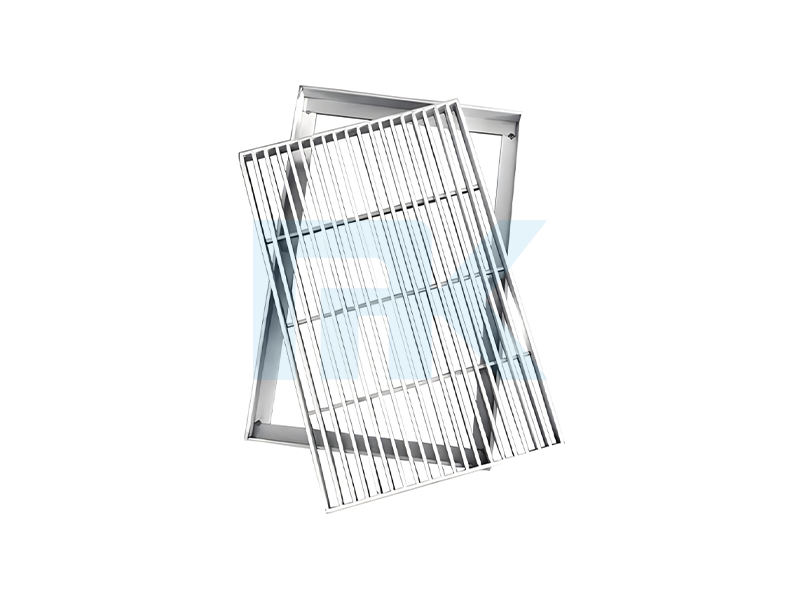
Key Advantages of a Linear System
- High Capacity: Because it collects water along a length, it can handle large volumes of storm runoff far more efficiently than a single drain.
- Aesthetic Appeal: With countless grate styles, the system can be nearly invisible or serve as a subtle design element, unlike large, circular catch basins.
- Flexibility: It can be used in a straight line, around curves, or even across entire areas like driveways, poolsides, and outdoor kitchens.
Design and Installation: Making it Work
The effectiveness of a linear drainage system lies in its design and proper installation. It is not enough to simply place a channel on the ground; the surrounding surfaces must be carefully prepared.
Grading and Slope
The key principle is grading. The paved or planted surface on either side of the drain must be slightly sloped toward the linear drain. A typical minimum slope is 1−2 percent (1 to 2 units of fall for every 100 units of length). This ensures that gravity actively pushes standing water into the channel.
Common Installation Scenarios
- Against a Wall or House Foundation: Placing a linear drain right against a structure is crucial. It intercepts all the water running off the wall, preventing it from saturating the soil next to the foundation, which can cause basement leaks.
- Across a Driveway or Entrance: To stop water from running down a slope and flooding a garage or low-lying area, a linear drain placed across the path acts as a highly efficient interceptor.
- Around a Pool Deck: Linear drains are often installed along the perimeter of pool decks to quickly capture splash-out and rain, maintaining safety and protecting the surrounding landscaping.
Linear drainage is more than just a functional necessity; it’s an investment in the longevity and beauty of your outdoor space. By effectively managing water runoff, this simple technology ensures that your garden remains a safe, healthy, and stunning oasis for years to come.