English
 عربى
عربى BLDC
BLDC

Content
How T Slot Fasteners Revolutionize Modular Assembly
T slot fasteners are the specialized hardware components used to join aluminum extrusions, which are the silver, grooved beams often called "industrial LEGO." Unlike traditional woodworking or welding, these fasteners allow you to slide a nut or bolt directly into the channel of the profile. This creates a high-strength connection that is entirely adjustable. If you realize your frame needs to be two inches wider, you don't have to drill new holes; you simply loosen the hardware, slide the components to the new position, and retighten. This flexibility makes them indispensable for building 3D printer frames, CNC machines, and custom workstations.
The "T" in the name refers to the shape of the internal track of the aluminum profile. The fasteners are engineered to lock into the overhanging lips of this track, distributing the clamping force across the internal surface area. This design prevents the hardware from pulling through the metal under heavy loads. Because there are various extrusion sizes—such as 2020, 3030, and 4040—choosing the correct T slot hardware is vital for ensuring a flush fit and a rigid structure.
Essential Types of T Slot Nuts and Bolts
Pre-Assembly T-Nuts (Slide-In)
Slide-in T-nuts must be inserted from the open end of the aluminum profile before you cap it off or attach other beams. These are generally regarded as the strongest type of T slot fasteners because they have a larger contact surface with the interior of the profile. They are shaped like a rectangular block with a threaded hole in the center. While they require more planning during the build process, they are less likely to spin or strip when you apply high torque.
Post-Assembly T-Nuts (Drop-In)
Drop-in nuts, often called hammer-head or T-shaped nuts, are a lifesaver for complex builds. These can be placed into the slot at any point along the beam, even after the ends are blocked. When you tighten the bolt, the nut rotates 90 degrees inside the channel and locks against the walls. This makes them perfect for adding accessories, sensors, or brackets to a finished machine without having to take the entire frame apart.
T-Bolts and Hammer Head Screws
While nuts are the most common choice, T-bolts reverse the logic. The head of the bolt is shaped to fit into the slot, leaving the threaded stud sticking out. These are incredibly useful for mounting thick plates or heavy components where it would be difficult to align a bolt into a hidden nut. You simply place the part over the studs and secure it with a standard hex nut from the outside.
Choosing the Right Fastener for Your Project
Not all T slot fasteners are created equal. The material and the "series" of your aluminum profile dictate exactly what hardware you need. Using a 20-series nut in a 40-series profile will result in a loose, unsafe connection. Use the table below to understand the common specifications found in the market today.
| Fastener Metric | Profile Compatibility | Installation Timing | Strength Rating |
| M3 / M4 / M5 | 2020 (20mm Series) | Pre or Post-Build | Moderate |
| M6 / M8 | 3030 / 4040 Series | Pre or Post-Build | High |
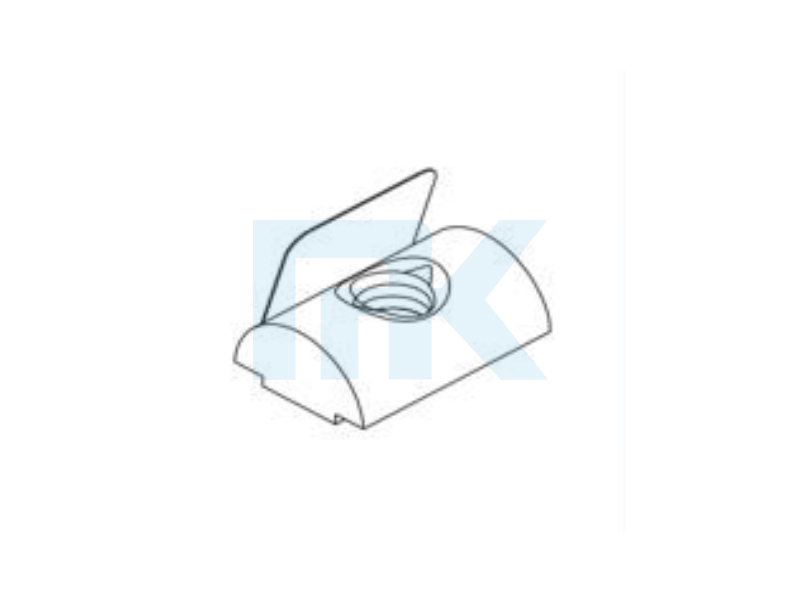
| Roll-in Spring Nut | All Series | Anytime (Snap-in) | Moderate |
Pro-Tips for a Secure and Square Assembly
One of the biggest challenges when using T slot fasteners is keeping the frame square while tightening. Because the fasteners slide, the beams can shift slightly as you apply torque. To prevent this, always use a machinist’s square while tightening your corner brackets. Tighten each fastener halfway first to "set" the position, then go back and do a final pass to lock everything down.
To ensure your project remains sturdy over time, consider these practical maintenance steps:
- Use a drop of medium-strength thread locker if your frame will be subjected to high vibrations (like a CNC router).
- Opt for stainless steel fasteners if your build will be used in damp or outdoor environments to prevent galvanic corrosion.
- Check that your bolt length is correct; a bolt that is too long will bottom out in the slot before it actually clamps the bracket.
- When using drop-in nuts, visually verify that they have rotated 90 degrees after tightening.
By mastering the use of different T slot fasteners, you unlock the ability to build almost anything. These small components provide the bridge between a pile of aluminum beams and a professional-grade industrial machine.