English
 عربى
عربى BLDC
BLDC

Content
- 1 What Is an Aluminum Profile?
- 2 The Extrusion Process: How Aluminum Profiles Are Made
- 3 Common Aluminum Alloys Used in Extrusion Profiles
- 4 Common Aluminum Profile Cross-Section Types
- 5 T-Slot Aluminum Profile Systems: The Modular Building Block
- 6 Surface Finishes for Aluminum Profiles
- 7 Major Applications of Aluminum Extrusion Profiles
- 8 Key Specifications to Check When Sourcing Aluminum Profiles
What Is an Aluminum Profile?
An aluminum profile is a structural or functional component produced by pushing heated aluminum alloy through a shaped die — a process called extrusion — to create a continuous length of material with a consistent cross-sectional shape. The "profile" refers to the cross-section: the precise geometry of channels, flanges, slots, hollow chambers, and wall thicknesses that define what the extruded section looks like when viewed end-on. Profiles can range from simple flat bars and angle sections to highly complex hollow multi-chamber shapes with integrated T-slots, snap-fit channels, and thin-wall features that would be impossible or prohibitively expensive to produce in steel by any other manufacturing method.
The combination of aluminum's low density, high strength-to-weight ratio, excellent corrosion resistance, and outstanding extrudability makes aluminum extrusion profiles one of the most versatile structural components in modern manufacturing and construction. A single aluminum profile can serve simultaneously as a structural beam, a connector channel, a cable conduit, a heat sink, and a decorative trim piece — functions that in other materials would require multiple separate components. This multi-functionality, combined with the ability to produce custom cross-sections economically at relatively modest production volumes, drives aluminum profiles into an exceptionally wide range of applications.
The global aluminum extrusion industry produces millions of tonnes of profiles annually, serving the construction, automotive, transportation, solar energy, electronics, furniture, and industrial automation sectors. Whether you are a design engineer specifying framing for a machine enclosure, a contractor selecting curtain wall profiles for a building facade, or a maker building a custom frame structure, understanding the key parameters of aluminum profiles — alloy, temper, cross-section geometry, surface finish, and dimensional tolerance — is essential for making the right selection.
The Extrusion Process: How Aluminum Profiles Are Made
Understanding how aluminum profiles are manufactured helps explain why certain designs are feasible, what dimensional tolerances are achievable, and how alloy choice affects both the production process and the final properties of the profile.
The process begins with a cylindrical billet of aluminum alloy, typically preheated to 400–500°C — a temperature at which aluminum becomes plastic and highly deformable without reaching its melting point. The heated billet is placed in an extrusion press and a hydraulic ram applies enormous force — typically 2,000 to 15,000 tonnes depending on press size and profile complexity — pushing the soft aluminum through a hardened die. The die has an opening machined to the precise negative shape of the desired profile cross-section. The aluminum flows through the die opening, emerging from the other side as a continuous length of the profile shape, which is then quenched with water or air cooling to set the microstructure, stretched slightly to relieve any curvature, cut to length, and artificially aged (heat-treated) to develop full mechanical strength.
The complexity of the profile cross-section is the key design parameter that determines die cost, press tonnage required, and achievable tolerance. Simple open shapes — angles, channels, flat bars — are low-cost to extrude and achieve tight tolerances easily. Complex hollow profiles with multiple interior voids and thin walls require bridge dies with internal mandrels, are more expensive to tool, and have tighter constraints on wall thickness ratios. A general design rule is that minimum wall thickness should be proportional to the circle size of the profile — for a 50mm-circle profile in 6063 alloy, 1.2mm minimum wall thickness is achievable; for a 200mm profile, 2.5mm is a more practical minimum.
Common Aluminum Alloys Used in Extrusion Profiles
Not all aluminum alloys extrude equally well, and the alloy choice profoundly affects both the mechanical properties of the finished profile and its suitability for various applications and surface treatments. The vast majority of aluminum extrusion profiles are produced in the 6xxx series alloys — silicon-magnesium alloys — which offer the best combination of extrudability, strength, corrosion resistance, and surface finish quality.
6063 Alloy
Alloy 6063 is the most widely used extrusion alloy globally, particularly in architectural, construction, and decorative applications. It has lower strength than 6061 but superior surface finish quality — it extrudes smoothly with a bright, clean surface that responds excellently to anodizing, producing the clear anodized finish that defines architectural aluminum. Typical yield strength in T6 temper is 170–215 MPa. It is the standard alloy for window and door frames, curtain wall systems, solar panel frames, LED profile housings, furniture, and any application where appearance quality and anodize response are priorities. Its extrudability allows very complex, thin-wall, multi-void profiles to be produced cost-effectively.
6061 Alloy
Alloy 6061 offers higher mechanical strength than 6063 — yield strength of 276 MPa in T6 temper — with good corrosion resistance and excellent machinability. It is used in structural applications where load-bearing capacity is a priority: machine frames, structural beams, marine components, automotive structural parts, and aerospace non-critical structures. 6061 is somewhat less extrudable than 6063 and produces a slightly rougher as-extruded surface, but it can be anodized, powder-coated, and painted with good results. It is the standard choice when the profile must carry significant loads rather than serve primarily as an enclosure or decorative element.
6082 Alloy
6082 is the highest-strength alloy in the 6xxx series commonly used for extrusion, with yield strength up to 260–310 MPa in T6 temper. It is widely specified in European structural engineering standards for load-bearing applications — bridges, structural joints, heavy vehicle frames, and industrial machinery structures where 6061 is used in North American specifications for similar applications. Like 6061, it machines well and accepts surface treatment effectively.
7xxx Series (7075, 7005)
The 7xxx zinc-magnesium alloys offer significantly higher strength — 7075-T6 has a yield strength of 503 MPa, approaching that of structural steel — but they are more difficult to extrude, less corrosion-resistant than 6xxx alloys, and significantly more expensive. They are reserved for high-performance applications in aerospace, defense, and high-end sporting equipment (bicycle frames, climbing hardware) where the maximum strength-to-weight ratio justifies the premium cost and more limited extrusion capability.
Common Aluminum Profile Cross-Section Types
The cross-section of an aluminum profile defines its structural characteristics, how it connects to other components, and what applications it suits. Here are the most widely used profile geometries:
| Profile Type | Cross-Section Description | Key Properties | Typical Applications |
| Flat Bar | Solid rectangular section | Simple, economical | Brackets, trim, stiffeners |
| Angle (L-section) | Two flanges at 90° | Corner stiffening | Framing corners, edging, brackets |
| Channel (C/U-section) | Web with two parallel flanges | Bending resistance | Rails, tracks, structural members |
| Square / Rectangular Tube | Hollow rectangular section | High stiffness, light weight | Structural frames, furniture, trailers |
| Round Tube | Circular hollow section | Equal strength all directions | Handrails, poles, hydraulic cylinders |
| T-Slot Profile | Square section with machined T-slots on faces | Modular connection system | Machine frames, workbenches, automation |
| I-Beam / H-section | Two flanges joined by central web | High bending efficiency | Structural beams, overhead crane rails |
| Custom / Specialty | Application-specific geometry | Optimized for specific function | LED housings, solar frames, door seals |
T-Slot Aluminum Profile Systems: The Modular Building Block
The T-slot aluminum profile system — also called structural aluminum framing or modular aluminum profile — deserves particular attention because it has become the dominant structural system for machine enclosures, workbenches, conveyor frames, safety barriers, automation frameworks, and industrial structures globally. Understanding how it works and what the key specifications mean is essential for anyone specifying or procuring these systems.
How T-Slot Systems Work
A T-slot profile has one or more longitudinal channels machined or extruded into each face of a square or rectangular cross-section. The channel opening is narrower than the channel interior, forming a T-shaped groove. Specially designed T-nuts or sliding nuts are inserted into the channel and can slide to any position along its length. When a bolt passes through a connector bracket and threads into the T-nut, tightening the bolt draws the T-nut up into the narrow slot, clamping it in position and fixing the bracket to the profile at exactly the required location — no drilling, welding, or separate fastener preparation required. This allows complex three-dimensional frame structures to be assembled quickly, adjusted, and reconfigured using only an Allen key and appropriate connectors.
Profile Series and Slot Dimensions
T-slot profiles are organized into series defined by the slot opening dimension and the spacing of the T-slots on the profile face. The most common series are 20mm (slot opening 6mm), 30mm, 40mm, 45mm, 60mm, 80mm, and 160mm — the series number refers to the basic module size of the profile. Within each series, profiles are available as single, double, and triple-width variants (e.g., 40x40mm, 40x80mm, 40x120mm) with different numbers of T-slots on each face. The choice of series depends primarily on the structural loads the frame must carry — a light workbench or display frame can be built from 20mm or 30mm series profiles, while a heavy machine enclosure or industrial conveyor frame requires 40mm, 45mm, or 60mm series for adequate stiffness and load capacity.
Connector and Accessory Ecosystem
A complete T-slot profile system includes a large ecosystem of compatible accessories: corner brackets (inside and outside), end connectors, hinge joints, angle brackets, cable management clips, panel retention clips, foot plates with leveling adjustment, castors, handles, and safety guards. For projects requiring enclosed machine safety barriers, polycarbonate or aluminum infill panels are cut to size and retained in the T-slots with specific panel mounting strips. The richness of the accessory ecosystem is an important selection criterion when choosing a T-slot profile brand — the ability to source all required connectors from a single compatible system simplifies procurement, ensures correct fit, and avoids the quality inconsistencies that arise from mixing components from different manufacturers.
Surface Finishes for Aluminum Profiles
The surface finish of an aluminum profile affects its corrosion resistance, appearance, wear resistance, and suitability for different environments. The main finishing options for aluminum extrusion profiles are:
- Mill finish (as-extruded): The natural surface produced by the extrusion process, without any additional treatment. Mill finish profiles have a dull silver-gray appearance with visible extrusion die lines. They are the least expensive option and are suitable for applications where appearance is not important and the natural oxide layer provides sufficient corrosion protection for the intended environment. Most structural T-slot profiles for machine frames are used in mill finish.
- Anodizing: An electrochemical process that converts the aluminum surface into a hard, porous aluminum oxide layer, then seals the pores. Anodized aluminum profiles have excellent corrosion resistance, good abrasion resistance, and can be colored in a range of shades during the anodizing process. Clear anodized (natural) and black anodized are the most common finishes for industrial and architectural profiles. The anodize layer is integral to the metal surface — it does not peel or chip like a coating — and thickness is specified in microns: Class 5 (5μm) for interior applications, Class 10 (10μm) for light outdoor use, Class 20 (20μm) for marine or aggressive outdoor environments, and Class 25 (25μm) for the most demanding architectural applications.
- Powder coating: An electrostatic application of dry polymer powder that is then thermally cured to form a tough, adherent coating. Powder coating provides a wide range of colors (any RAL or BS color), textures (smooth, fine texture, wrinkle), and finish sheens (gloss, satin, matte). Coating thickness is typically 60–80 microns. Powder-coated aluminum profiles are the standard for architectural applications — window frames, curtain wall systems, doors, and balustrades — where specific color matching to a building design is required. The coating adds some dimensional thickness to the profile, which must be accounted for in design if tight fit tolerances are required between mating components.
- PVDF (polyvinylidene fluoride) coating: A high-performance liquid paint system used for high-specification architectural cladding and curtain wall applications. PVDF coatings offer superior UV resistance, color retention, and chemical resistance compared to standard powder coatings, and are specified for buildings in aggressive coastal, high-UV, or chemical environments where long-term color and finish retention over 20–30 years is required. PVDF-coated profiles are significantly more expensive than powder-coated equivalents but are the benchmark finish for premium architectural aluminum.
- Brushed / mechanical finish: A controlled abrasive or mechanical finishing process that creates a consistent linear grain texture on the profile surface. Brushed finishes are used for decorative applications where a contemporary, premium aesthetic is desired — interior design fittings, furniture, display systems, and consumer electronics housings. A brushed finish is typically followed by an anodize coat to protect the grain texture and add corrosion resistance.
Major Applications of Aluminum Extrusion Profiles
Aluminum profiles serve an extraordinarily broad range of applications — broader than almost any other single product form in the metals industry. Here are the most significant application sectors:
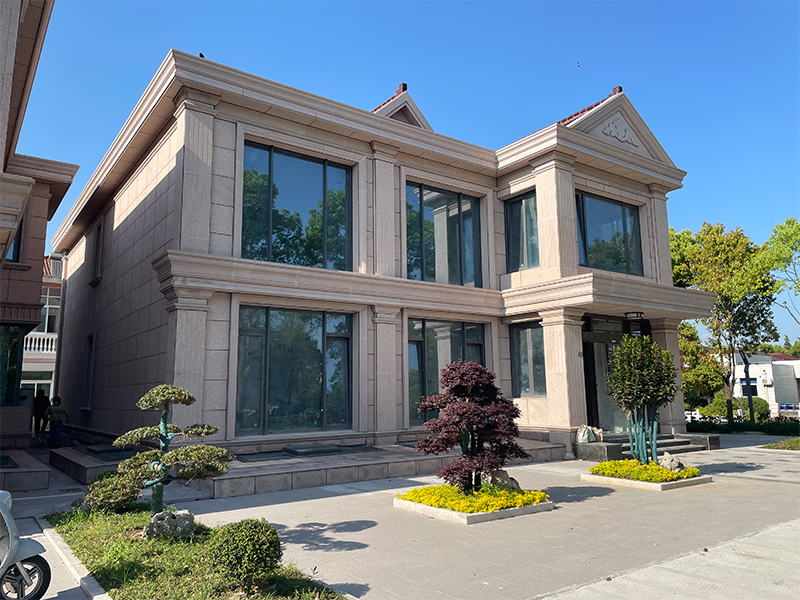
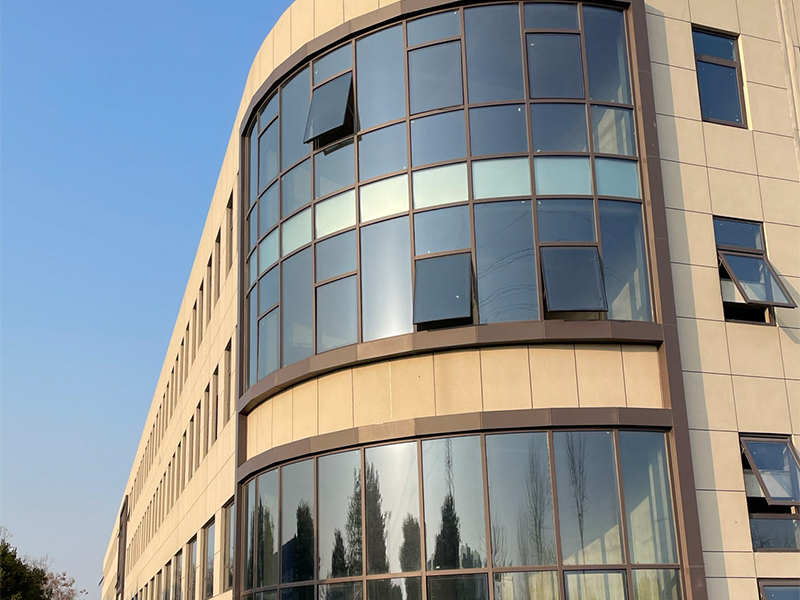
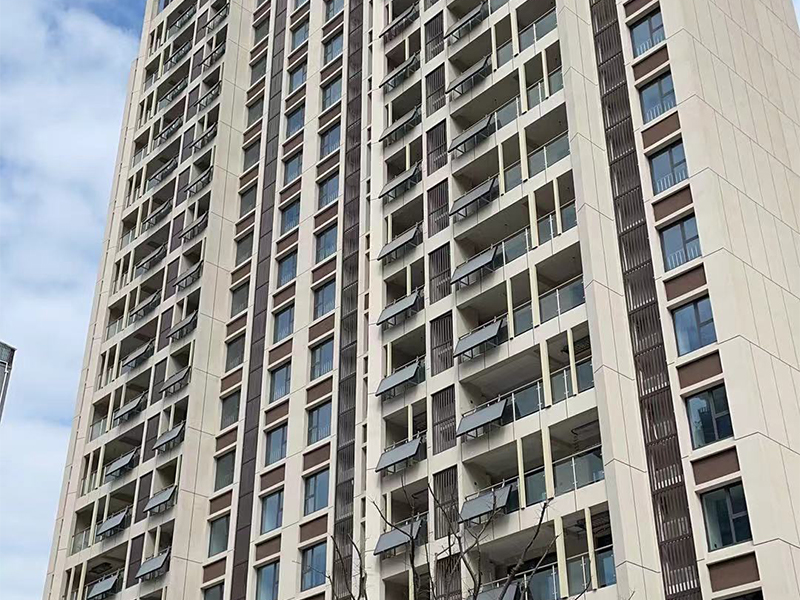
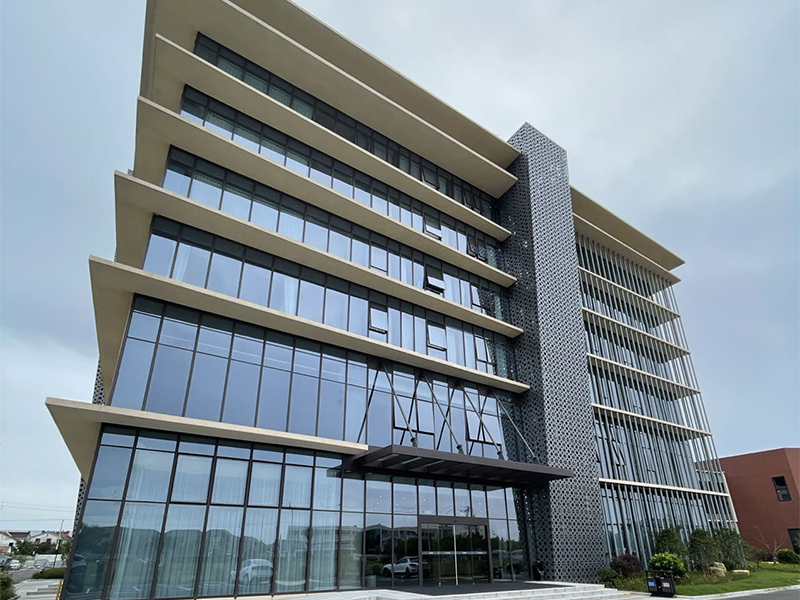
- Construction and architecture: Window frames, curtain wall systems, storefront glazing, sliding door tracks, balustrades, roof drainage gutters, structural glazing caps and pressure plates, and facade cladding systems. Architectural aluminum profiles are almost always 6063 alloy with anodized or powder-coated finishes, and they are engineered to accommodate thermal break inserts that prevent heat conduction between inside and outside faces of the building envelope.
- Solar energy: Photovoltaic (PV) panel mounting frames and rail systems are one of the fastest-growing extrusion markets globally. Solar mounting profiles must be lightweight (to minimize roof loading), strong enough to resist wind and snow loads, and reliably corrosion-resistant over 25+ year system lifespans. Anodized 6063 and 6005A alloy profiles are standard in this application.
- Industrial automation and machine building: T-slot aluminum profile systems are the dominant structural material for machine frames, workbenches, safety enclosures, conveyor systems, robot cell barriers, and modular factory furniture. The ability to build and reconfigure structures quickly without welding is a major productivity advantage in production environments.
- Transportation: Rail vehicle structures, truck body frames, bus passenger modules, ship superstructure panels, and aerospace secondary structures all use aluminum extrusion profiles to reduce vehicle weight while maintaining structural integrity. The weight reduction compared to steel directly translates to improved fuel efficiency or increased payload capacity.
- LED lighting: Aluminum LED channel profiles serve as both the mechanical housing and the heat sink for LED strip lighting. The profile body conducts heat away from the LED chip and dissipates it through the profile surface area, extending LED life. LED profiles are available in surface-mount, recessed, corner, and pendant configurations, with diffuser channels to accept polycarbonate or frosted acrylic cover strips.
- Electronics and heat sinks: Extruded aluminum heat sink profiles are used throughout power electronics, industrial drives, amplifiers, and computing equipment. The high thermal conductivity of aluminum (around 160 W/m·K for 6063) combined with the ability to extrude complex fin geometries that maximize surface area makes extruded aluminum heat sinks the standard thermal management solution across a huge range of power electronics applications.
Key Specifications to Check When Sourcing Aluminum Profiles
Whether you are buying standard stock profiles or commissioning a custom extrusion, these are the specifications and documentation points that matter most:
- Alloy and temper designation: Always specify both the alloy number and the temper. "6063-T6" and "6063-T5" are the same alloy but have different mechanical properties — T6 (solution heat-treated and artificially aged) is stronger than T5 (artificially aged from the extrusion heat). Many budget profile suppliers supply T5 temper while marketing it ambiguously — confirm the temper in the material test certificate.
- Mill test certificate (MTC): For structural or load-bearing applications, request a mill test certificate confirming the alloy, temper, mechanical properties (yield strength, tensile strength, elongation), and chemical composition of the actual production batch. Reputable suppliers provide MTCs as standard; if a supplier cannot provide one, that is a significant red flag for structural applications.
- Dimensional tolerances: Standard extrusion tolerances are defined in EN 755 (Europe), ASTM B221 (North America), and equivalent national standards. Confirm whether standard tolerances are adequate for your application or whether tighter tolerances require post-extrusion machining. Wall thickness tolerances for thin-wall profiles are particularly important — a nominal 1.5mm wall with ±0.2mm tolerance means actual wall thickness could be as thin as 1.3mm, which may be structurally significant.
- Surface finish specification: For anodized profiles, specify the anodize class (thickness in microns) and the color. For powder-coated profiles, specify the RAL color, finish type (gloss/satin/matte), and minimum coating thickness. Verify that the supplier can provide color consistency between batches if you will be ordering in multiple deliveries — color variation between production batches is a common issue with both anodizing and powder coating.
- Length and cutting tolerance: Standard extrusion lengths are typically 6m in Europe and 12ft or 20ft in North America, but most suppliers offer cut-to-length service. Confirm the cutting tolerance (typically ±1–2mm for saw-cut profiles), the minimum order quantity for cut lengths, and whether end faces are square-cut or may require facing if precision end-face flatness is required for your application.
- Lead time for custom profiles: Standard stock profiles are available from inventory for immediate delivery. Custom profiles require die design, die manufacture (typically 2–4 weeks and $500–$3,000 die cost depending on complexity), initial extrusion trial, and approval before production can begin. Factor custom profile lead times realistically into project planning — rushing a custom extrusion tool often leads to expensive design iterations.