English
 عربى
عربى BLDC
BLDC

Content
- 1 What Aluminum Extrusions Actually Are
- 2 How the Aluminum Extrusion Process Works Step by Step
- 3 The Most Commonly Used Aluminum Alloys for Extrusion
- 4 Standard vs. Custom Aluminum Extrusion Profiles
- 5 Surface Finishing Options for Aluminum Extrusions
- 6 Where Aluminum Extrusions Are Used Across Industries
- 7 Key Design Guidelines for Engineers Specifying Aluminum Extrusions
- 8 Sustainability and Recyclability of Aluminum Extrusions
What Aluminum Extrusions Actually Are
If you've ever looked closely at a window frame, a solar panel mounting rail, a heat sink on an electronic device, or the structural frame of a truck body, you've almost certainly been looking at an aluminum extrusion — you just may not have known it by that name. Aluminum extrusions are aluminum profiles produced by forcing heated aluminum alloy through a shaped die opening, much like squeezing toothpaste through a nozzle. The result is a continuous length of aluminum in a precise, consistent cross-sectional shape that can be cut to any required length.
The process sounds simple, but it's capable of producing extraordinarily complex cross-sections — hollow tubes, multi-chamber profiles, T-slots, I-beams, channels, angles, and highly intricate custom shapes that would be difficult or prohibitively expensive to produce by any other manufacturing method. This combination of geometric flexibility and mass-production efficiency is what makes aluminum extrusion one of the most widely used manufacturing processes in the world, second only to aluminum rolling in terms of volume.
How the Aluminum Extrusion Process Works Step by Step
Understanding the production process helps engineers, designers, and buyers make better decisions about tolerances, surface finish, alloy selection, and tooling costs. The extrusion process involves several clearly defined stages, each of which has a direct impact on the quality and properties of the finished profile.
Billet Preparation and Heating
The raw material for aluminum extrusion is a cylindrical log of aluminum alloy called a billet. Billets are typically cut from large cast aluminum logs and preheated in a furnace to temperatures between 400°C and 500°C — hot enough to make the aluminum plastic and workable, but well below its melting point. Getting this temperature right is critical: too cold and the aluminum requires excessive press force and produces poor surface quality; too hot and the material loses structural integrity and surface definition.
Pressing Through the Die
The heated billet is loaded into the extrusion press container, and a hydraulic ram applies enormous pressure — commonly between 1,000 and 15,000 tonnes depending on the press size and profile complexity — to force the softened aluminum through the steel die. The die is a precision-machined tool with an opening that matches the desired profile cross-section exactly. As the aluminum flows through the die, it takes on the shape of the opening and emerges as a continuous length of extruded profile on the run-out table beyond the press.
For hollow profiles — such as square tubes, rectangular tubes, or complex multi-void sections — a more sophisticated die design called a porthole or bridge die is used. This splits the aluminum flow around central mandrel supports and then rejoins it under pressure, creating seamless hollow chambers within the extruded profile. These weld seams, formed under pressure at temperature, are metallurgically sound and meet structural performance requirements in most applications.
Quenching, Stretching, and Cutting
As the extruded profile exits the die, it is cooled — either by air quenching fans or water mist quenching systems — to lock in the microstructural properties developed during pressing. The profile is then transferred to a stretcher, where it is gripped at both ends and pulled to straighten any bow or twist introduced during extrusion and cooling. Stretching also relieves residual internal stresses in the profile. Once straightened, profiles are cut to stock lengths — typically 6 or 8 meters — using a cold saw, before being transferred to an aging oven for heat treatment.
Heat Treatment and Aging
Most structural aluminum extrusions are made from heat-treatable alloys and undergo artificial aging after extrusion — a controlled thermal process that precipitates fine intermetallic particles within the aluminum matrix, significantly increasing hardness and strength. The most common temper for extruded profiles is T6, which denotes solution heat treated and then artificially aged. A T6 temper in a 6061 or 6063 alloy profile, for example, delivers yield strengths in the range of 200–270 MPa — more than adequate for the vast majority of structural applications.
The Most Commonly Used Aluminum Alloys for Extrusion
Not all aluminum alloys are equally suited to extrusion. The alloy must have good extrudability — the ability to flow through complex die geometries without cracking or tearing — while also delivering the mechanical, corrosion, and surface finish properties required for the end application. The 6000-series alloys dominate the extrusion industry because they strike the best balance across all of these requirements.
| Alloy | Key Alloying Elements | Typical Yield Strength (T6) | Extrudability | Best For |
| 6063 | Mg, Si | ~145 MPa | Excellent | Architectural profiles, window frames, anodized finishes |
| 6061 | Mg, Si, Cu | ~276 MPa | Good | Structural components, transport, marine |
| 6082 | Mg, Si, Mn | ~260 MPa | Good | High-strength structural, bridges, cranes |
| 6005A | Mg, Si | ~215 MPa | Very Good | Rail vehicles, ladder rails, traffic structures |
| 7075 | Zn, Mg, Cu | ~500 MPa | Difficult | Aerospace, high-load structural parts |
For the overwhelming majority of construction, industrial, and consumer product applications, 6063 and 6061 are the go-to alloys. 6063 is chosen when surface finish and anodizing quality are paramount; 6061 is preferred when higher strength and machinability take precedence. The 7000-series alloys like 7075 are reserved for demanding aerospace and defense applications where maximum strength-to-weight ratio justifies the added cost and processing complexity.
Standard vs. Custom Aluminum Extrusion Profiles
One of the most important decisions buyers face is whether to use a standard off-the-shelf extruded aluminum profile or commission a custom die for a purpose-designed cross-section. Both options have clear advantages and trade-offs that depend on volume, application requirements, and budget.
Standard Aluminum Profiles
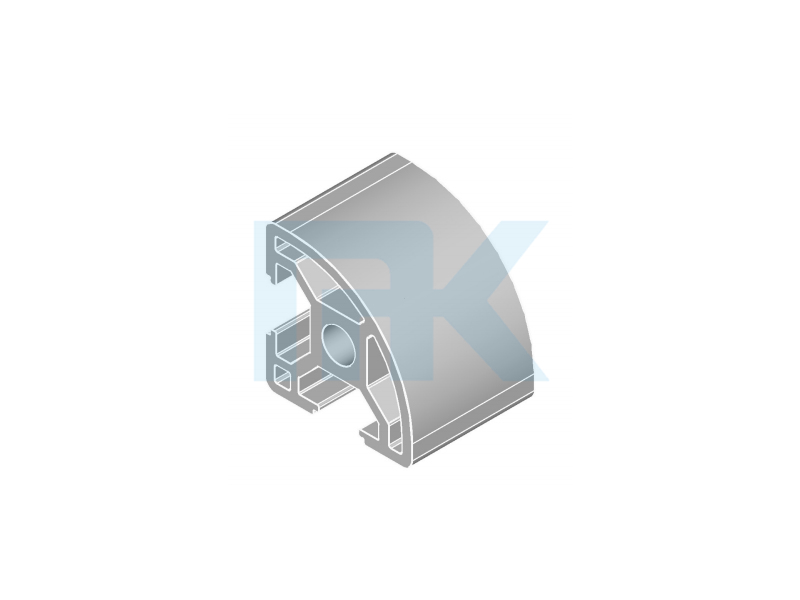
Standard extruded aluminum profiles — angles, channels, flat bars, square and rectangular tubes, round tubes, T-sections, I-beams, and H-sections — are stocked by aluminum distributors in a wide range of sizes and wall thicknesses. These profiles are produced in large volumes using shared tooling, which means no die costs, immediate availability, and competitive pricing. For most general fabrication, structural, and framing applications, a standard profile can be selected from a distributor catalog and delivered within days.
The limitation of standard profiles is that they may not perfectly match the functional or aesthetic requirements of a specific application. A designer specifying a standard T-slot framing profile for a machine guard enclosure will find dozens of compatible options from T-slot system suppliers. But a product engineer designing a heat sink for a specific electronics package, or an architect specifying a curtain wall mullion with a precise thermal break geometry, will almost certainly require a custom die.
Custom Extruded Aluminum Profiles
Custom aluminum extrusion begins with die design. The buyer provides a 2D cross-section drawing — typically a DXF or PDF — and the extruder's engineering team evaluates it for extrudability, specifies the appropriate alloy and die steel, and manufactures the die, usually in three to six weeks. Die costs vary considerably depending on profile complexity: a simple solid shape might require a die costing $500–$1,500, while a complex multi-void hollow profile in a large press might require a die worth $3,000–$8,000 or more. These costs are a one-time investment; once the die exists, it can be used for subsequent production runs indefinitely with periodic maintenance.
Custom profiles are economically justified at production volumes that offset the die cost — typically a minimum order of 500 kg to 1,000 kg is needed to make custom extrusion financially sensible versus machining or fabricating from standard stock. At higher volumes, custom profiles almost always reduce total part cost by eliminating secondary machining operations, reducing assembly steps, and minimizing material waste.
Surface Finishing Options for Aluminum Extrusions
Aluminum extrusions can be supplied in mill finish — the natural surface produced directly by the extrusion process — or processed through a range of secondary surface treatments that enhance appearance, corrosion resistance, hardness, or paint adhesion. The choice of surface finish should be made at the design stage, as it affects dimensional tolerances, lead time, and cost.
- Mill Finish: The as-extruded surface, showing natural aluminum color with some surface marks and die lines. Suitable for hidden structural applications where appearance is not critical.
- Anodizing: An electrochemical process that thickens the natural aluminum oxide layer, producing a hard, porous coating that can be dyed in a range of colors and then sealed. Anodized extrusions offer excellent corrosion resistance, good hardness, and a premium appearance. Architectural anodizing typically produces coatings of 15–25 microns; hard anodizing for industrial wear applications can reach 25–100 microns.
- Powder Coating: Electrostatically applied dry paint powder, cured in an oven to produce a durable, attractive finish available in virtually any RAL or custom color. Powder-coated aluminum extrusions are widely used in architectural applications and offer good impact resistance and UV stability.
- Liquid Paint (PVDF/Fluoropolymer): High-performance liquid coatings such as Kynar 500-based PVDF systems offer superior long-term UV and chemical resistance compared to standard powder coats. Specified for demanding architectural facades and exterior applications with 20–30 year performance requirements.
- Mechanical Finishing: Brushing, polishing, or bead-blasting applied before anodizing or coating to achieve specific surface textures — from mirror-bright to satin or matte finishes.
- Electrophoretic Coating (E-coat): A wet paint process providing uniform thin-film coverage in recessed areas and complex geometries. Often used as a primer coat beneath powder coat for enhanced corrosion protection.
Where Aluminum Extrusions Are Used Across Industries
The versatility of extruded aluminum profiles means they appear across an enormous range of industries and product categories. Understanding where and how they are used helps illustrate why aluminum extrusion has become such a foundational manufacturing process globally.
Construction and Architecture
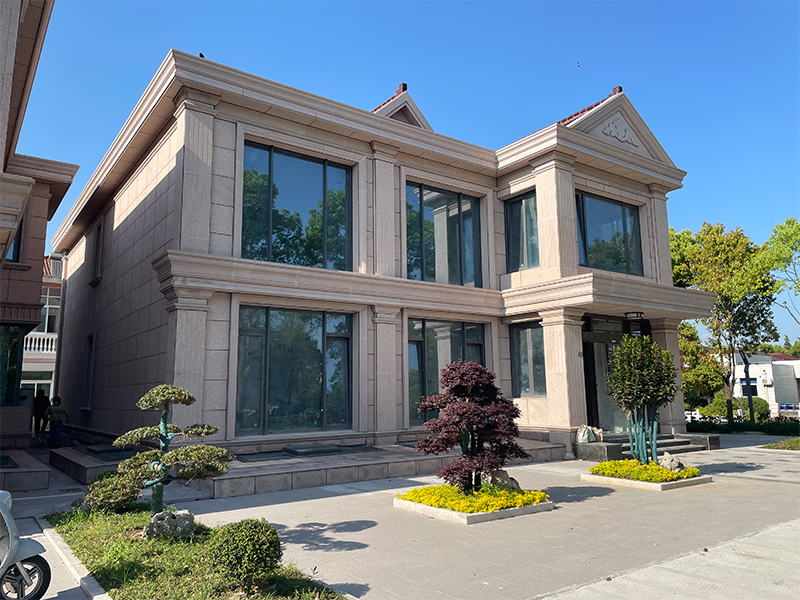
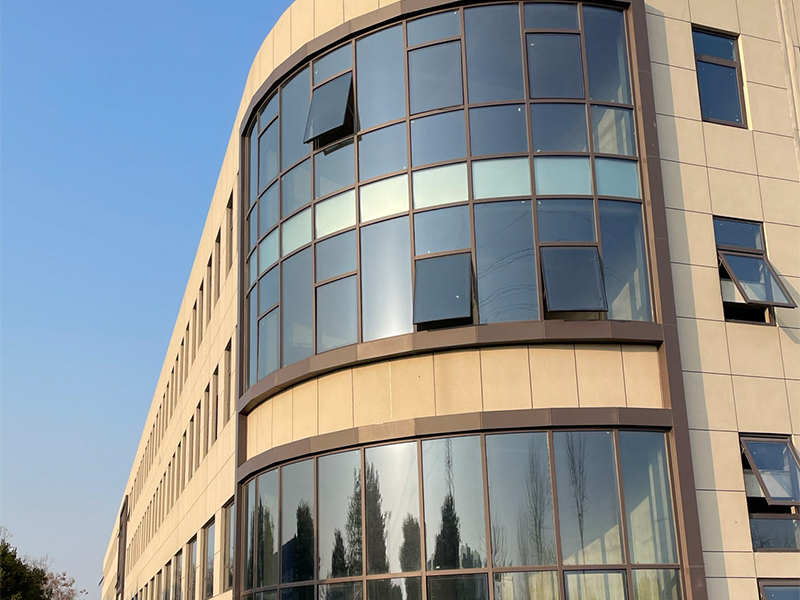
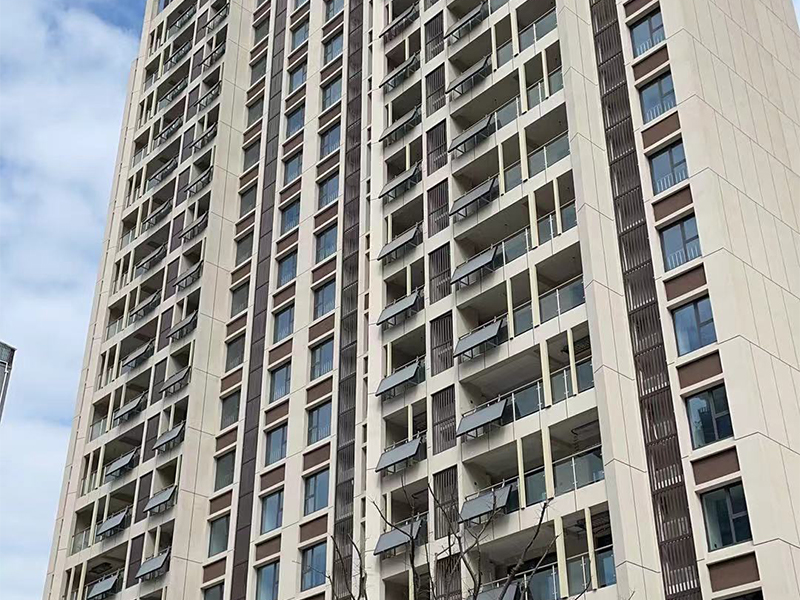
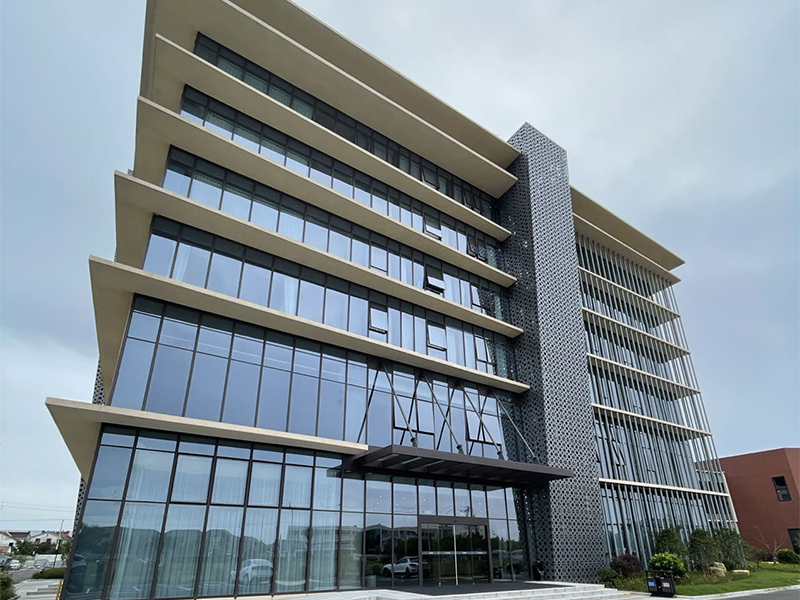
The construction sector is the single largest consumer of aluminum extrusions worldwide. Window and door frames, curtain wall systems, storefront glazing, structural glazing, roof lanterns, shop fronts, balustrade systems, solar shading louvers, and rainscreen cladding support systems are all predominantly constructed from extruded aluminum profiles. The combination of low weight, high corrosion resistance, dimensional precision, and the ability to incorporate complex thermal break geometries directly into extruded profiles makes aluminum the dominant material for modern facade systems.
Transportation and Automotive
Extruded aluminum profiles are used extensively in automotive body structures, truck bodies, trailer frames, rail vehicle carbodies, aerospace fuselage stringers, and marine superstructures. The automotive industry's drive toward lightweighting — reducing vehicle mass to meet fuel economy and emissions targets — has dramatically increased the use of aluminum extrusions in body-in-white structures, bumper systems, door sill reinforcements, roof rails, and battery enclosures for electric vehicles. A modern electric vehicle may contain 80–120 kg of extruded aluminum components.
Electronics and Thermal Management
Heat sinks are one of the most recognizable applications of custom aluminum extrusion in electronics. Aluminum's high thermal conductivity (approximately 160–200 W/m·K for 6063 alloy) combined with the ability to extrude complex fin geometries makes it ideal for passive and active cooling of power electronics, LED lighting drivers, motor controllers, and computing hardware. Heat sinks are typically produced from 6063 alloy in T5 or T6 temper and are often supplied in mill finish or with a black anodized surface to improve emissivity.
Industrial Machinery and Modular Framing
T-slot aluminum extrusion systems — standardized modular profiles with continuous longitudinal T-slots that accept sliding nuts and fasteners — have become the de facto standard for building machine guards, workstation frames, conveyor structures, automation equipment enclosures, and laboratory fixtures. Systems from suppliers such as 80/20, Bosch Rexroth, and Item are built around metric or imperial T-slot extrusion series and provide a vast ecosystem of compatible connectors, panels, linear guides, and accessories that allow engineers to construct and reconfigure structures rapidly without welding or heavy fabrication.
Renewable Energy
Solar mounting systems — the structural frameworks that support photovoltaic panels on rooftops and in ground-mounted solar farms — are almost universally fabricated from extruded aluminum profiles. Rail sections, mid-clamps, end-clamps, and splice joints are all produced as custom or semi-standard extrusions optimized for ease of installation, structural load capacity, and long-term corrosion resistance in outdoor environments. The renewable energy sector's rapid global growth has made solar mounting one of the fastest-growing application areas for aluminum extrusion in the past decade.
Key Design Guidelines for Engineers Specifying Aluminum Extrusions
Designing a custom aluminum extrusion profile that is both functional and manufacturable requires understanding a set of practical design rules that experienced extruders apply routinely. Following these guidelines reduces die costs, improves surface quality, and minimizes production problems.
- Maintain uniform wall thickness where possible: Large variations in wall thickness within a single profile cause uneven metal flow through the die, leading to surface defects and warping. Where thickness variations are unavoidable, transition them gradually rather than abruptly.
- Keep minimum wall thickness appropriate to the profile size: As a general rule, wall thickness should be at least 1.0–1.5 mm for small profiles and 2.0–3.0 mm for larger, wider sections. Thinner walls increase die fragility and the risk of surface tearing.
- Add radii to all internal corners: Sharp internal corners create stress concentrations in the die and in the finished profile. A minimum internal radius of 0.5 mm — and ideally 1.0 mm or more — improves die life, metal flow, and fatigue resistance in structural profiles.
- Avoid very deep, narrow tongues: Thin projecting tongues in the die cross-section are fragile and prone to breakage under extrusion pressure. If a profile requires narrow fins or projections, keep the depth-to-width ratio below 10:1 where possible.
- Consolidate functions into the profile where feasible: One of the principal economic advantages of custom extrusion is the ability to integrate multiple functions — snap-fit features, screw ports, gasket grooves, hinge channels — directly into the cross-section, eliminating secondary machining or assembly operations.
- Specify tolerances realistically: Standard dimensional tolerances for extruded aluminum profiles are defined in EN 755 (Europe) and ASTM B221 (North America). Tighter tolerances are achievable but require additional die correction iterations, slower extrusion speeds, and increased cost. Only specify precision tolerances on dimensions that are functionally critical.
Sustainability and Recyclability of Aluminum Extrusions
Aluminum is one of the most recyclable materials in widespread industrial use, and this characteristic is particularly relevant for extruded profiles. Recycling aluminum requires only approximately 5% of the energy needed to produce primary aluminum from bauxite ore, and recycled aluminum is metallurgically equivalent to primary metal for most extrusion alloys. This gives aluminum extrusions a compelling sustainability profile over their full lifecycle — especially in applications such as building facades, vehicle structures, and solar mounting systems, where the aluminum is accessible and recoverable at end of life.
Many aluminum extruders now actively source recycled billet content and publish Environmental Product Declarations (EPDs) quantifying the embodied carbon of their extruded profiles. For architects and specifiers working on projects targeting LEED, BREEAM, or other green building certifications, choosing extruded aluminum profiles with high recycled content and a verifiable EPD contributes meaningfully to materials credits and whole-building carbon assessments. The shift toward low-carbon and near-zero-carbon aluminum — produced using hydroelectric power and high recycled content — is accelerating as sustainability requirements tighten across construction, automotive, and consumer product sectors.