English
 عربى
عربى BLDC
BLDC

Content
- 1 What Are Galvanized T Slot Fasteners and Why They Matter
- 2 Common Types of Galvanized T Slot Fasteners
- 3 How to Choose the Right Size and Grade
- 4 Installation Tips for a Secure Fit
- 5 Why Galvanization Beats Other Coatings for Corrosion Resistance
- 6 Maintenance and Inspection Best Practices
- 7 Typical Applications Across Industries
What Are Galvanized T Slot Fasteners and Why They Matter
Galvanized T slot fasteners are hardware components designed to fit into T-slot extruded aluminum profiles, most commonly seen in workbenches, machine frames, conveyor systems, and modular assembly structures. What sets them apart from standard fasteners is the zinc coating applied through a hot-dip or electro-galvanizing process, which forms a protective barrier against rust, oxidation, and general wear. This makes them especially useful in environments where moisture, humidity, or outdoor exposure would otherwise cause ordinary steel fasteners to corrode quickly.
The T-slot design itself allows the fastener's head to slide into the channel of the extrusion and lock into place with a quarter turn, giving builders flexibility to adjust or reposition components without drilling new holes. When combined with galvanization, these fasteners offer both mechanical convenience and long-term durability, which is why they are widely used in industrial automation, workshop furniture, and structural framing projects.
Common Types of Galvanized T Slot Fasteners
Not all T slot fasteners look or function the same way. Depending on the load requirements and the extrusion profile being used, different styles are chosen for different jobs.
Drop-In T-Nuts
These are inserted directly into the open end of a T-slot channel and slide to the desired position. They are popular because they don't require disassembly of the frame and can be adjusted quickly during a build.
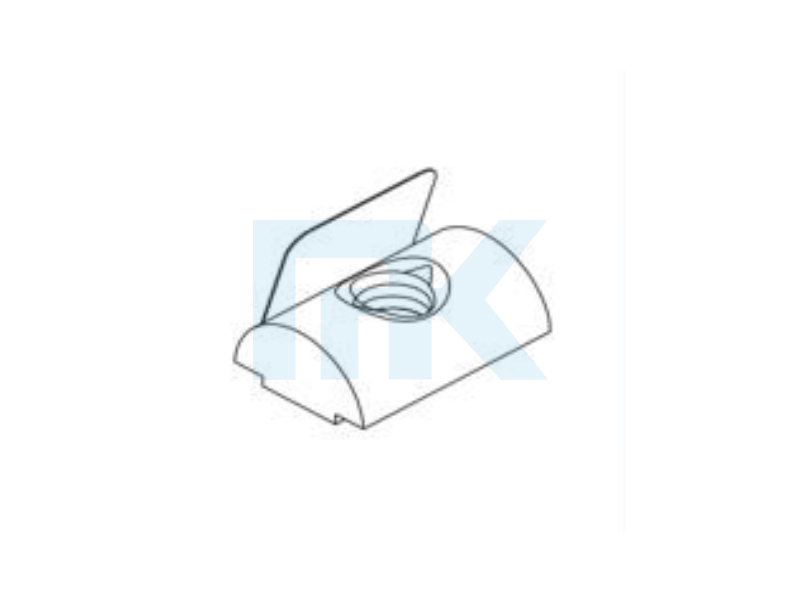
Spring-Loaded T-Nuts
A small spring keeps the nut tilted until pressure is applied, letting it snap into the slot at any point along the extrusion rather than only from the end. This is especially useful for retrofitting hardware onto an already assembled frame.
Roll-In T-Nuts
These are rolled into position before the extrusion is capped or joined to another piece, offering a very snug fit with minimal rattle, which is ideal for high-vibration equipment.
- Drop-in T-nuts: best for open-ended slots and quick assembly
- Spring-loaded T-nuts: best for mid-span attachment points
- Roll-in T-nuts: best for vibration-heavy or continuous-load setups
How to Choose the Right Size and Grade
Choosing the correct galvanized T slot fastener starts with matching the slot dimension of your extrusion profile, since even a slightly oversized or undersized nut can cause the fastener to wobble or fail to seat properly. Manufacturers typically label extrusions by slot width, such as 6mm, 8mm, or 10mm T-slots, and fasteners are sized to correspond directly with these measurements.
Beyond size, the steel grade matters just as much as the coating. A fastener with a strong base metal but poor galvanization will corrode over time, while one with excellent coating but low tensile strength may bend or shear under load. Buyers should look for a balance of both factors, especially for structural or load-bearing applications.
| Slot Width | Typical Fastener Size | Common Use Case |
| 6mm | M4 / M5 | Light fixtures, small enclosures |
| 8mm | M5 / M6 | Workbenches, shelving units |
| 10mm | M6 / M8 | Machine frames, conveyor supports |
Installation Tips for a Secure Fit
Installing galvanized T slot fasteners correctly is straightforward, but a few small habits make a big difference in long-term reliability. First, always slide the fastener to its intended position before fully tightening, since forcing an already-tightened nut along the channel can strip the galvanized coating and expose the bare metal underneath.
Second, use a torque wrench when possible rather than tightening by feel, since over-torquing can deform the T-nut's wings and reduce its holding power inside the slot. Under-torquing, on the other hand, leaves connections prone to loosening under vibration.
- Clean the slot channel before inserting fasteners to remove debris or metal shavings
- Apply thread-locking compound in high-vibration environments
- Double-check alignment before final tightening to avoid cross-threading
- Use a washer where the load is concentrated on a small contact area
Why Galvanization Beats Other Coatings for Corrosion Resistance
Compared to plain zinc plating or black oxide finishes, hot-dip galvanized coatings form a thicker, more durable barrier that bonds metallurgically with the steel surface rather than just sitting on top of it. This means the coating is far less likely to peel, chip, or wear away during handling, transport, or repeated adjustment within a T-slot channel.
Another advantage is that galvanized coatings offer sacrificial protection, meaning the zinc layer corrodes first and protects the underlying steel even if the surface gets scratched. This is particularly valuable for T slot fasteners used outdoors or in washdown environments like food processing plants, where exposure to moisture and cleaning chemicals is frequent.
Maintenance and Inspection Best Practices
Even with strong corrosion resistance, periodic inspection helps extend the service life of galvanized T slot fasteners, especially in equipment that gets adjusted or disassembled frequently. Look for white, powdery residue on the zinc surface, which can indicate the early stages of zinc oxidation, sometimes called white rust, and is usually a sign that the fastener has been exposed to excess moisture without adequate airflow.
It's also worth checking that fasteners haven't loosened due to vibration, since a loose T-nut can shift position inside the channel and cause uneven load distribution across the frame. A simple quarterly check, especially for machinery in continuous operation, can catch these issues before they lead to structural problems.
Typical Applications Across Industries
Galvanized T slot fasteners show up in far more places than most people realize, largely because T-slot extrusion systems have become a go-to solution for modular, adjustable framing. In manufacturing plants, they're used to build workstations, safety guarding, and conveyor supports that can be reconfigured as production needs change.
In outdoor or semi-outdoor settings, such as solar panel mounting structures or agricultural equipment, the galvanized coating becomes especially important since these fasteners are directly exposed to rain, humidity, and temperature swings. Even in smaller-scale projects like DIY workbenches, garage shelving, or camera rigs, builders increasingly choose galvanized options over standard zinc-plated hardware simply because they hold up better over years of use.
- Industrial automation frames and safety enclosures
- Solar racking and outdoor mounting systems
- Workshop furniture and modular shelving
- Conveyor systems and material handling equipment