English
 عربى
عربى BLDC
BLDC

Content
- 1 What Makes T Slot Aluminum Extrusions So Popular in Modern Builds
- 2 How T Slot Aluminum Extrusions Are Made and Why the Process Matters
- 3 Common Profile Sizes and How to Choose the Right One
- 4 Choosing the Right Fasteners and Connectors for T Slot Aluminum Extrusions
- 5 Typical Applications Where T Slot Aluminum Extrusions Shine
- 6 Tips for Cutting, Assembling, and Maintaining Your Extrusion Frame
- 7 T Slot Aluminum Extrusions vs Other Framing Materials
What Makes T Slot Aluminum Extrusions So Popular in Modern Builds
If you've spent any time browsing workshop equipment, robotics kits, or factory automation lines, you've probably run into T slot aluminum extrusions without even realizing it. These are the silvery, ridged aluminum bars with T-shaped channels running along their length, and they've quietly become one of the go-to building materials for anyone who needs a strong, adjustable, and reusable structural frame. Unlike welded steel frames that are permanent once assembled, T slot aluminum extrusions let you bolt pieces together, take them apart, and reconfigure them as your project changes. That flexibility, combined with aluminum's light weight and natural corrosion resistance, is exactly why these profiles show up everywhere from garage workbenches to industrial conveyor systems.
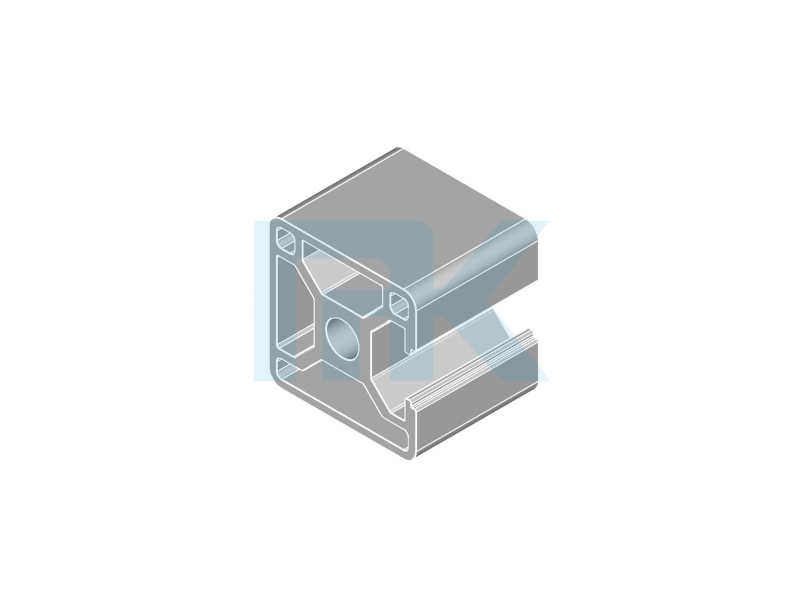
The "T slot" name comes from the shape of the channel cut into each face of the bar. This channel is wider at the bottom and narrower at the opening, forming a T-shaped cavity that accepts special nuts. Those nuts slide into the slot and can be positioned anywhere along the length of the extrusion, which means you're not locked into fixed hole patterns like you would be with drilled steel tubing. Once you understand how the slot and nut system works, it becomes obvious why so many engineers and hobbyists default to T slot aluminum extrusions for anything that needs to be built, tested, and rebuilt.
How T Slot Aluminum Extrusions Are Made and Why the Process Matters
T slot aluminum extrusions are produced through a hot extrusion process. A cylindrical aluminum billet is heated until it becomes soft and pliable, then forced through a steel die that has the exact cross-sectional shape of the profile you want. As the aluminum is pushed through, it takes on the die's shape, including the T slots, mounting channels, and any internal cavities. The extruded bar is then cooled, stretched to straighten it, and cut to length before being aged to reach its final hardness.
This manufacturing method matters for a few practical reasons. First, it allows for extremely consistent cross-sections, so a 2020 profile bought today will match one bought five years from now, which is critical if you're expanding an existing frame. Second, the aluminum alloy used, most commonly 6061-T6 or 6063-T5, determines the strength and finish of the final extrusion. 6061-T6 is stronger and better suited to load-bearing structures, while 6063-T5 has a smoother surface finish and is often chosen for lighter-duty or more visually finished applications. Knowing which alloy your supplier uses can save you from underestimating how much weight your frame can actually handle.
Common Profile Sizes and How to Choose the Right One
One of the trickiest parts of working with T slot aluminum extrusions is figuring out which profile size actually fits your project. Sizes are typically labeled by their cross-sectional dimensions in millimeters, such as 2020, 2040, 3030, or 4040. The first two digits and the last two digits represent the width and height of the bar in millimeters, so a 2040 profile is 20mm by 40mm. Picking the right size comes down to balancing strength, weight, and cost against what you're actually building.
| Profile Size | Typical Use Case | Relative Load Capacity |
| 2020 | 3D printer frames, small enclosures, light jigs | Light |
| 2040 | Workbenches, guarding, small conveyor frames | Medium |
| 3030 | Machine frames, automation cells, robotic arms | Medium-High |
| 4040 | Heavy machine bases, gantries, industrial racks | High |
As a general rule, if your structure will bear significant weight, experience vibration, or span long unsupported distances, go with a larger profile or add extra bracing. For lighter applications like camera rigs, sensor mounts, or display stands, smaller profiles keep the build lightweight and cost-effective without sacrificing rigidity.
Choosing the Right Fasteners and Connectors for T Slot Aluminum Extrusions
The real strength of a T slot aluminum extrusion system isn't just the bars themselves, it's the ecosystem of connectors, brackets, and nuts designed to work with them. Getting the fastener selection right makes the difference between a wobbly frame and a rock-solid one.
T-Nuts and Drop-In Fasteners
T-nuts slide into the extrusion's channel and rotate or drop into place to grip the slot walls. Roll-in T-nuts are inserted before the ends of a profile are capped, while drop-in T-nuts can be added at any point along an already-assembled frame, which is handy when you need to add a bracket after the fact.
Brackets, Gussets, and Corner Connectors
Corner brackets and gussets reinforce joints where two extrusions meet at an angle, typically 90 degrees. These are essential for load-bearing corners since a single fastener alone won't resist twisting forces over time.
- Standard L-brackets for basic 90-degree joints
- Gusset plates for heavier, load-bearing corners
- Inside corner brackets for a cleaner, low-profile finish
- Hinges and connector plates for panels and doors
- Feet and casters for mobile frames and workbenches
Typical Applications Where T Slot Aluminum Extrusions Shine
Because T slot aluminum extrusions are modular, lightweight, and easy to modify, they've found their way into a huge range of industries. In manufacturing, they're used to build machine guarding, conveyor supports, and workstation frames that can be reconfigured as production lines change. In robotics and automation, engineers rely on them for gantry systems, linear motion platforms, and test rigs where precise, repeatable mounting points matter. Even outside of industrial settings, T slot extrusions have become popular for DIY furniture, camera slider rigs, greenhouse frames, and retail display fixtures.
What ties all these applications together is the need for a structure that can be built quickly, adjusted without specialized tools, and trusted to hold its shape under repeated use. A welded steel frame might be cheaper per pound, but once it's built, it's built. T slot aluminum extrusions give you the freedom to loosen a few bolts, slide a bracket to a new position, and lock it back down in minutes.
Tips for Cutting, Assembling, and Maintaining Your Extrusion Frame
Working with T slot aluminum extrusions is generally beginner-friendly, but a few practical habits will save you time and frustration. Always cut extrusions with a fine-tooth blade designed for aluminum, and support both sides of the cut to avoid burring the slot openings. A cheap or dull blade can deform the T slots enough that nuts no longer slide smoothly, which becomes a nagging annoyance during assembly.
When assembling, dry-fit your entire frame before fully tightening any bolts. This lets you check squareness and alignment while everything can still shift slightly. Use a speed square or framing square at each joint, and tighten fasteners gradually and evenly rather than cranking down one bolt fully before moving to the next. For long-term maintenance, aluminum extrusions rarely need more than an occasional wipe-down, but it's worth periodically checking that T-nuts haven't loosened from vibration, especially on frames near motors or moving machinery.
- Use a fine-tooth aluminum-cutting blade for clean, burr-free cuts
- Dry-fit the frame before final tightening
- Check squareness at every joint with a square, not just by eye
- Tighten bolts gradually and evenly across the frame
- Re-check T-nut tightness periodically on frames exposed to vibration
T Slot Aluminum Extrusions vs Other Framing Materials
It's worth comparing T slot aluminum extrusions against the alternatives before committing to a full build. Welded steel offers higher raw strength per dollar but sacrifices flexibility and adds weight, plus it usually requires a welder and a permanent design decision. Plain aluminum tubing without T slots is lighter than steel but lacks the built-in mounting channels, meaning every bracket has to be drilled and measured by hand. Extruded plastic or PVC framing is cheaper and lighter still, but it can't match the rigidity or load capacity of aluminum, making it unsuitable for anything beyond light-duty enclosures.
For most people building machine frames, workstations, or automation equipment, T slot aluminum extrusions hit the sweet spot between strength, weight, cost, and adjustability. The upfront cost per foot is higher than plain tubing, but the time saved on drilling, measuring, and redesigning usually pays that difference back many times over across the life of the project.