English
 عربى
عربى BLDC
BLDC

Content
- 1 What Are Aluminium Solar Brackets and Why Do They Matter?
- 2 Types of Aluminium Solar Brackets Available
- 3 Key Components of an Aluminium Solar Bracket System
- 4 How to Choose the Right Aluminium Solar Brackets for Your Project
- 5 Aluminium Solar Bracket Installation: Step-by-Step Overview
- 6 Common Mistakes to Avoid with Aluminium Solar Mounting Brackets
- 7 Maintenance and Long-Term Care of Aluminium Solar Brackets
- 8 Aluminium Solar Brackets vs. Other Mounting Materials
- 9 Where to Buy Quality Aluminium Solar Brackets
What Are Aluminium Solar Brackets and Why Do They Matter?
Aluminium solar brackets are the structural components used to mount and secure solar panels onto roofs, ground frames, walls, or other surfaces. Often called aluminium solar mounting brackets or aluminium PV mounting brackets, these fittings act as the backbone of any solar installation. Without a solid, corrosion-resistant bracket system, even the highest-quality solar panels would be vulnerable to wind uplift, panel misalignment, and long-term structural failure.
Aluminium is the material of choice for solar mounting systems worldwide, and for good reason. It is lightweight yet structurally strong, naturally resistant to rust and corrosion, and easy to cut, drill, and assemble on-site. Compared to steel brackets, aluminium solar panel brackets are significantly lighter, reducing the overall load on the roof structure and making installation faster and less labour-intensive. They also have an excellent service life — most aluminium solar racking systems are rated to last 25 years or more, closely matching the lifespan of the panels themselves.
Whether you are installing a small residential rooftop system or a large commercial solar array, selecting the right aluminium solar bracket system is one of the most critical decisions you will make. It directly affects the safety of the installation, the ease of maintenance, and the long-term performance of the entire solar energy system.
Types of Aluminium Solar Brackets Available
The solar mounting industry offers a wide variety of aluminium bracket configurations designed for different roof types, panel orientations, and installation environments. Understanding the main categories will help you match the right system to your specific project.
Roof-Mount Aluminium Brackets
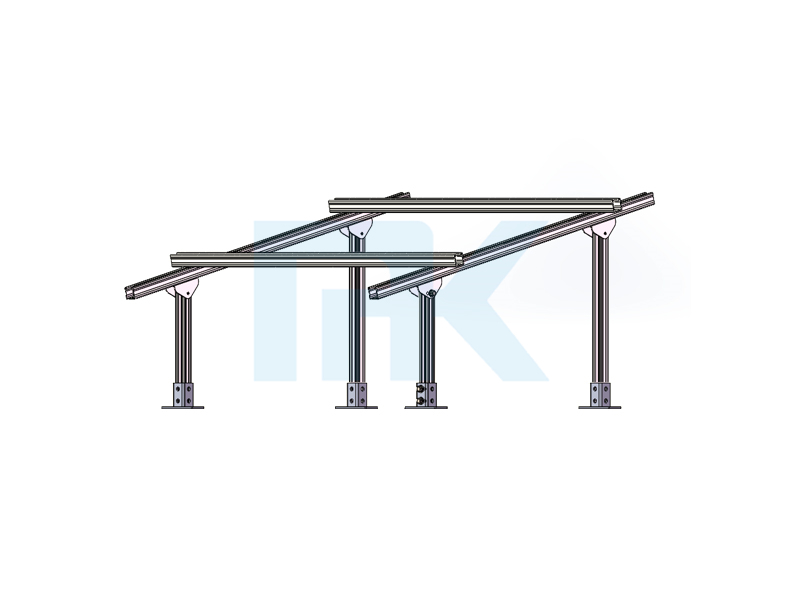
Roof-mount systems are the most common type for residential and commercial buildings. These aluminium solar roof brackets attach directly to the existing roof structure — either to rafters, battens, or a flat roof deck. They typically consist of a roof hook or anchor point, aluminium rails, and mid/end clamps to hold the panels in place. Pitched roof brackets are designed for tile, slate, or metal sheet roofs, while flat roof brackets use angled aluminium frames to tilt panels at the optimal angle (usually 10–15° for drainage and energy yield).
Ground-Mount Aluminium Brackets
Ground-mounted solar systems use heavy-duty aluminium solar mounting brackets anchored to concrete footings or driven piles. These systems allow panels to be positioned at any angle and orientation, independent of the building structure. They are ideal for large solar farms, agricultural land, or properties where the roof is unsuitable for solar installation. Ground-mount aluminium frames are typically more robust in profile thickness to handle additional wind and snow loads at ground level.
Wall-Mount and Façade Brackets
Vertical or near-vertical mounting on walls and building façades requires specialised aluminium solar panel support brackets that handle the unique load distribution of a near-upright panel. These are commonly used in building-integrated photovoltaic (BIPV) applications, carports, and noise barriers. The bracket design ensures panels remain firmly attached even under high lateral wind forces.
Ballasted (Non-Penetrating) Brackets
For flat roofs where waterproofing membranes cannot be penetrated, ballasted aluminium solar brackets use weighted bases — usually concrete blocks — to hold the racking system in place without any roof fixings. This approach protects the roof warranty and speeds up installation, though careful wind load calculations are essential to determine the correct amount of ballast required.
Key Components of an Aluminium Solar Bracket System
A complete aluminium solar mounting system is made up of several individual components that work together. Knowing what each part does helps you assemble, purchase, and troubleshoot the system more effectively.
| Component | Function | Typical Material |
| Roof Hook / Base Anchor | Connects the racking system to the roof structure | Aluminium or stainless steel |
| Aluminium Rails / Profiles | Horizontal or vertical channels that panels clamp onto | Anodised aluminium alloy |
| Mid Clamps | Secure panels in the middle of a row | Aluminium with stainless steel bolts |
| End Clamps | Hold the outermost panels at each end of a row | Aluminium with stainless steel bolts |
| Splice Connector | Joins two rail sections end-to-end | Aluminium insert |
| T-Bolt / Channel Nut | Slides into rail channel to position clamps anywhere along the rail | Stainless steel |
| Grounding Clip / Lug | Bonds panels and rails to the earthing system | Stainless steel or tinned copper |
How to Choose the Right Aluminium Solar Brackets for Your Project
Choosing the correct aluminium solar mounting brackets involves more than just picking a product that fits the panel frame. Several technical and site-specific factors need to be assessed before making a purchase.
Assess Your Roof Type and Condition
Different roof coverings — concrete tiles, clay tiles, metal sheets, asphalt shingles, or flat membranes — require different base fixing methods. For example, a tile roof requires a hook that slides under the tile and bolts directly to the rafter, while a standing-seam metal roof uses a clamp that grips the seam without any drilling. Always confirm that the roof structure is strong enough to support the combined weight of the panels, brackets, and any additional snow or wind loads before proceeding.
Consider Wind and Snow Load Requirements
Aluminium solar brackets must be engineered to withstand the local climate conditions. In areas with high wind speeds or significant snowfall, thicker rail profiles and closer anchor spacing are required. Reputable manufacturers provide load tables and software tools to help installers calculate the correct rail span, hook spacing, and fixing torque for their specific wind and snow zone. Always follow the manufacturer's structural calculations or commission an independent engineering review for large installations.
Match the Bracket to the Panel Frame Thickness
Solar panel frames vary in thickness, typically ranging from 30mm to 50mm. Mid and end clamps must be compatible with the specific frame height of your panels. Using undersized clamps can result in panels being held insecurely, while oversized clamps may not tighten properly. Most aluminium solar bracket kits are available in different clamp heights to match common panel dimensions — always check compatibility before ordering.
Check Corrosion Resistance and Surface Treatment
Although aluminium is naturally corrosion-resistant, the grade and surface finish still matter — especially in coastal or industrial environments where salt air and pollutants accelerate degradation. Look for brackets made from 6005-T5 or 6061-T6 aluminium alloy and finished with an anodising treatment of at least 10–15 microns thickness. For bolt hardware, stainless steel grade A2 or A4 is recommended. Avoid mixing aluminium directly with copper or steel in a way that creates galvanic corrosion pathways.
Evaluate Ease of Installation
Well-designed aluminium solar racking systems are engineered for fast, error-free assembly. Features to look for include pre-assembled clamps with captured bolts (so nothing drops during roof work), tool-free or single-tool assembly, rail splice connectors with integrated bonding, and clear installation guides with torque specifications. A system that saves even 20 minutes per row across a large installation can significantly reduce overall labour costs.
Aluminium Solar Bracket Installation: Step-by-Step Overview
While every aluminium solar mounting system has its own specific instructions, most pitched-roof installations follow a similar sequence. Here is a general outline of the process:
- Mark rafter positions: Use a stud finder or roof plan to locate rafters and mark their positions on the roof surface. Roof hooks must be fixed into rafters, not just the roof deck or battens, to achieve structural integrity.
- Install roof hooks or anchors: Lift the relevant tiles, drill into the rafter at the marked positions, apply waterproof sealant around the fixing, and bolt the roof hooks in place. Replace tiles over the hook shank.
- Attach aluminium rails: Slide the T-bolts into the rail channel, then position the rail onto the hooks and tighten. Use a spirit level to ensure rails are level across the entire row. Connect rail sections using splice connectors, leaving a small thermal expansion gap.
- Position and clamp panels: Lift each panel onto the rails, space them evenly, and secure using mid and end clamps. Tighten clamp bolts to the manufacturer's specified torque — typically 8–14 Nm for standard aluminium systems.
- Install grounding and bonding: Fit grounding clips between panel frames and rails, and connect the earthing cable from the rail system to the building's main earth terminal in accordance with local electrical regulations.
- Final inspection: Check that all bolts are torqued correctly, panels are secure with no movement, rails are properly aligned, and all roof penetrations are sealed. Document the installation with photos for warranty and maintenance records.
Common Mistakes to Avoid with Aluminium Solar Mounting Brackets
Even experienced installers can run into problems if certain details are overlooked. Here are the most frequent issues encountered with aluminium solar bracket installations and how to avoid them:
- Fixing into battens instead of rafters: Roof battens are not load-bearing enough for solar anchor points. Always fix directly into rafters to ensure the system can handle wind and snow loads.
- Skipping waterproofing on roof penetrations: Any hole drilled through the roof covering must be thoroughly sealed. Neglecting this step is one of the leading causes of water ingress and roof damage in solar installations.
- Under-torquing or over-torquing clamp bolts: Under-torquing leaves panels loose, while over-torquing can crack the panel frame. Always use a calibrated torque wrench and follow the manufacturer's specification exactly.
- Ignoring thermal expansion gaps: Aluminium rails expand and contract with temperature changes. Rail splice connectors should be positioned to leave a 6–10mm expansion gap, otherwise rails can buckle in hot weather.
- Mixing incompatible metals: Placing aluminium in direct contact with bare steel or copper without proper isolation can cause galvanic corrosion over time. Always use stainless steel fasteners and, where necessary, insulating washers.
- Choosing the cheapest brackets without checking certifications: Low-cost aluminium solar brackets that lack testing certifications (such as MCS, IEC, or local building code approvals) may not meet structural requirements and could void your solar panel warranty.
Maintenance and Long-Term Care of Aluminium Solar Brackets
One of the major advantages of aluminium solar panel brackets is their low maintenance requirements. However, a periodic inspection schedule will ensure the system remains safe and continues to perform at its best throughout its service life.
Annual Visual Inspection
Check for any visible signs of corrosion, particularly around fixing points and in areas where dissimilar metals are in contact. Look for loose clamps, cracked rail profiles, or any panels that appear to have shifted position. In coastal areas or polluted environments, inspect more frequently — every six months is advisable.
Bolt and Clamp Retorquing
Thermal cycling and wind-induced vibration can gradually loosen fasteners over time. It is good practice to re-check the torque on all clamp bolts and rail fixing bolts after the first year of operation, and then every three to five years thereafter. Always use the correct torque values specified in the installation manual.
Cleaning Debris from Rails
Leaves, bird droppings, and grit can accumulate in the channel of aluminium rails and around panel frames. This debris can trap moisture and, over time, lead to localised corrosion or shading on the lower edge of the panels. Clear any accumulation during the annual inspection to prevent this issue.
Aluminium Solar Brackets vs. Other Mounting Materials
While aluminium dominates the solar mounting market, it is worth understanding how it compares to alternative materials to appreciate why it has become the industry standard.
| Material | Weight | Corrosion Resistance | Cost | Typical Use Case |
| Aluminium Alloy | Light | Excellent | Medium | All solar installations |
| Galvanised Steel | Heavy | Good (if undamaged) | Low | Large ground-mount farms |
| Stainless Steel | Heavy | Outstanding | High | Marine/coastal environments |
| Plastic / Polymer | Very Light | Good | Low | Lightweight/temporary setups |
For the vast majority of residential and commercial solar projects, aluminium solar brackets offer the best overall balance of weight, strength, corrosion resistance, workability, and cost. Galvanised steel is sometimes used for large utility-scale ground-mount systems where the additional weight is not a concern and raw material cost savings are significant at scale.
Where to Buy Quality Aluminium Solar Brackets
When sourcing aluminium solar mounting brackets, it pays to prioritise quality and certification over the lowest possible price. Here are the key things to look for when evaluating suppliers:
- Certifications: Look for products with recognised certifications such as MCS (UK), UL 2703 (USA), CE marking (Europe), or AS/NZS standards (Australia/New Zealand). These confirm the brackets have been independently tested for structural performance and safety.
- Alloy specification: Ask the supplier to confirm the aluminium alloy grade used. Reputable suppliers of aluminium solar racking components will readily provide material certification (e.g., 6005-T5 or 6061-T6 alloy).
- Complete system availability: It is strongly advisable to source all racking components — rails, hooks, clamps, connectors, and fixings — from the same manufacturer to ensure compatibility and maintain a single point of warranty responsibility.
- Technical support: Good suppliers offer load calculation software, installation guides, and technical support for both standard and non-standard applications. This support is especially valuable for complex roofs or large commercial projects.
- Warranty terms: A manufacturer warranty of at least 10 years on aluminium solar bracket systems is standard among quality suppliers. Some offer 25-year warranties to match the panel warranty period.