English
 عربى
عربى BLDC
BLDC

Content
Understanding T-Slot Fastener Mechanics and Compatibility
T-slot fasteners are the essential components that allow for the modularity and strength found in aluminum extrusion systems. Unlike traditional permanent welding, these fasteners utilize the "T" shaped channel of the profile to create a mechanical lock. The effectiveness of a T-slot connection depends heavily on the interface between the fastener head and the internal flanges of the extrusion. When a bolt is tightened into a T-nut or a specialized bolt head, it exerts a clamping force that pulls the two surfaces together, creating high frictional resistance that prevents the joint from sliding under load.
Compatibility is the most critical factor when selecting hardware. Fasteners are generally categorized by the "Series" of the extrusion they fit, such as 20 Series, 30 Series, or 40 Series (metric), and fractional sizes like 10 or 15 Series (imperial). Using a fastener designed for a different series can lead to insufficient thread engagement or physical interference with the slot walls, which compromises the structural integrity of the frame.
Primary Categories of T-Slot Nuts
Drop-In vs. Slide-In T-Nuts
The choice between drop-in and slide-in nuts often dictates the assembly workflow and the long-term maintainability of the structure. Slide-in nuts are loaded from the open end of the profile; they offer the highest strength because they have a larger surface area in contact with the extrusion flange. However, they cannot be added once the ends of the profile are blocked by other components.
- Hammerhead/Drop-In Nuts: These feature a narrowed profile that allows them to be placed anywhere along the slot and rotated 90 degrees to lock. They are ideal for adding accessories to existing frames.
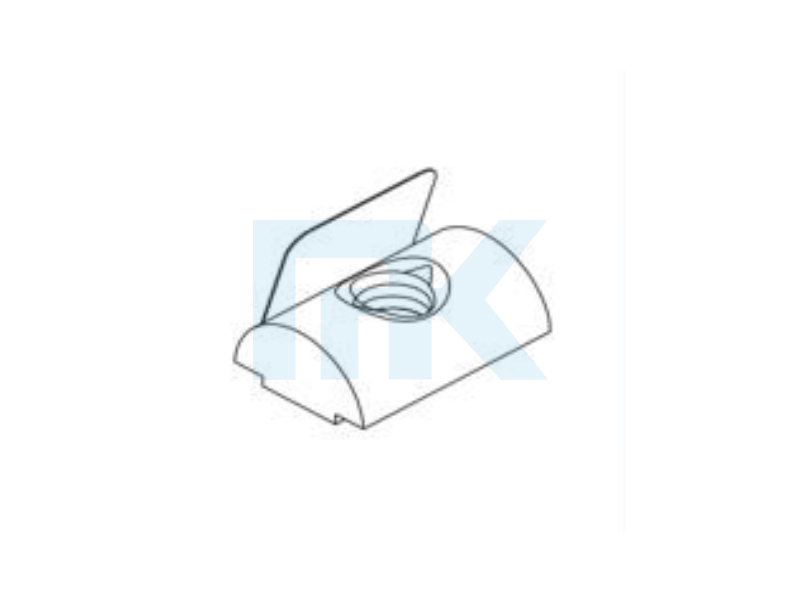
- Roll-In T-Nuts: These utilize a spring-loaded ball bearing to stay in place even in vertical slots, preventing the nut from sliding down before the bolt is tightened.
- Economy T-Nuts: Typically rectangular, these provide a cost-effective solution for high-volume builds where end-loading is feasible.
Technical Specifications and Load Ratings
Selecting the right fastener requires an understanding of the mechanical limits of the materials involved. Most T-slot fasteners are manufactured from zinc-plated steel or stainless steel to prevent galvanic corrosion when in contact with the aluminum profile. The following table highlights common fastener sizes and their typical applications in modular framing.
| Fastener Size | Typical Extrusion Series | Common Application |
| M3 / M4 | 20 Series | 3D Printer Frames / Light Sensors |
| M5 / M6 | 30 & 40 Series | Workstations / CNC Machine Bases |
| M8 / 5/16-18 | 45 & 80 Series | Heavy Industrial Guards / Heavy Motion Lab Brackets |
Specialized Connection Bolts and Screws
Button Head vs. Socket Head Cap Screws
The external profile of the fastener head affects both the aesthetics and the clearance of the assembly. Button head screws provide a low-profile, rounded finish that reduces the risk of snagging on clothing or wires, making them standard for external guarding. Socket head cap screws (SHCS), while more prominent, allow for higher torque application due to their deeper internal hex drive, making them the preferred choice for structural joints that experience high vibration.
In addition to standard screws, "T-Bolts" are frequently used. Unlike a T-nut which receives a bolt, a T-bolt has a head shaped to fit the slot with a threaded stud protruding outward. This allows a technician to place a bracket over the studs and secure it with a hex nut, which is often easier for one-person assembly of large panels or heavy steel plates onto an aluminum frame.
Best Practices for Vibration Resistance
In dynamic environments, such as factory floors or mobile robotic bases, vibration can cause T-slot fasteners to back out over time. To ensure a "set and forget" installation, engineers should implement specific locking strategies. The use of serrated flanged nuts or bolts can provide a mechanical bite into the aluminum surface, significantly increasing the torque required for the fastener to loosen accidentally.
- Thread-Locking Compounds: Applying a medium-strength anaerobic adhesive to the threads is highly effective for permanent or semi-permanent installations.
- Spring Washers: Placing a wave or split washer between the bolt head and the bracket maintains tension even if minor material compression occurs.
- Proper Torqueing: Over-tightening can strip the aluminum slot or the fastener threads, while under-tightening leads to joint fatigue. Using a torque wrench calibrated to the specific fastener grade is recommended for critical industrial builds.