English
 عربى
عربى BLDC
BLDC

Content
The Structural Superiority of Carbon Steel in T-Slot Systems
While aluminum extrusions are popular for their lightweight properties, carbon steel T-slot connectors are the preferred choice for heavy-duty industrial applications where structural integrity is non-negotiable. These connectors are engineered to handle significantly higher shear and tensile loads than their alloy counterparts. Carbon steel provides a high modulus of elasticity, ensuring that joints remain rigid under constant vibration or heavy weight bearing. This makes them indispensable in the construction of CNC machine frames, heavy-duty workstations, and automated production line enclosures.
Common Types of Carbon Steel T-Slot Connectors
Choosing the right connector depends on the specific geometry of your build and the directional forces the joint will encounter. Carbon steel variants are often zinc-plated or chrome-finished to prevent oxidation while maintaining the raw strength of the steel core.
- Inner Brackets: These are L-shaped hidden connectors that slide into the T-slot, providing a clean, aesthetic look while offering high resistance to displacement.
- Linear Extension Connectors: Used to join two profiles end-to-end, these carbon steel bars ensure that the alignment remains perfect across long spans.
- Cross and T-Plates: External plates made of heavy-gauge carbon steel that bolt across the face of the profiles for maximum reinforcement.
- Pivot Joints: Specialized steel connectors that allow for adjustable angles, essential for ergonomic arms or custom-angled bracing.
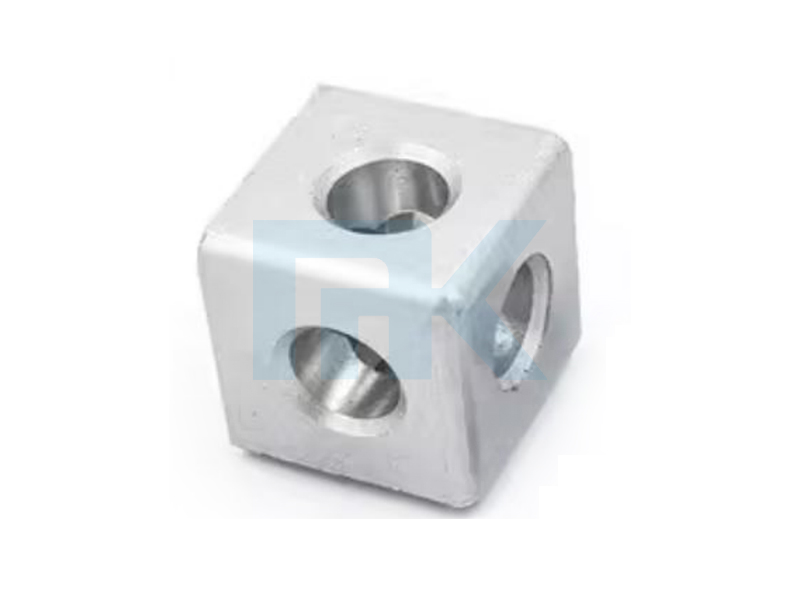
Technical Specifications and Load Capacities
To ensure the safety of an industrial build, engineers must look at the hardness and yield strength of the connector material. Carbon steel connectors typically undergo a heat-treatment process to reach a hardness level that prevents the "stripping" of threads when high torque is applied to the fasteners. Below is a comparison of typical attributes found in carbon steel connectors versus standard aluminum variants.
| Feature | Carbon Steel Connectors | Aluminum Connectors |
| Tensile Strength | High (approx. 400-600 MPa) | Moderate (approx. 200-300 MPa) |
| Vibration Resistance | Excellent | Fair |
| Durability | Permanent/Industrial Use | Lightweight/Prototyping |
Best Practices for Installation and Maintenance
Torque Application and Fastening
One of the primary benefits of carbon steel is its ability to withstand high torque. When installing these connectors, it is vital to use high-tensile bolts (such as Grade 8.8 or 10.9) to match the strength of the connector. Using a torque wrench ensures that the T-nut within the slot is seated firmly, creating a friction-lock that prevents the joint from loosening over time due to thermal expansion or mechanical harmonics.
Surface Protection and Environment
In environments with high humidity or chemical exposure, the finish of the carbon steel connector is paramount. Galvanized or nickel-plated connectors provide a sacrificial layer that protects the steel from rust. For indoor cleanroom environments, chrome-plated steel is often preferred because it does not shed particles and maintains a high-gloss, professional appearance while providing the necessary structural stiffness.
Selecting the Right Connector for Your Project
To determine if carbon steel T-slot connectors are right for your application, consider the "Static vs. Dynamic" nature of your load. If your frame will support a moving robotic arm or a vibrating motor, the fatigue resistance of carbon steel is a requirement. Additionally, consider the slot size of your extrusion (e.g., 20 series, 30 series, or 40 series), as carbon steel connectors are precision-machined to fit specific slot widths to ensure maximum surface contact between the connector and the extrusion wall.