English
 عربى
عربى BLDC
BLDC

Galvanized T slot fasteners are the quiet workhorses of a modular aluminium frame. They sit inside the groove, draw two profiles together, and then spend years resisting moisture, cutting fluid and the occasional knock from a forklift. If you have ever opened a machine guard and found a rusted nut seized in a slot you cannot reach, you already know that the coating matters nearly as much as the thread.
We build and supply T slot profile systems every day, so the notes below come from the bench rather than the brochure. You will find what "galvanized" really means on a fastener, which types we keep in stock, how to match a nut to your profile series, and the small habits that prevent most of the failures we are asked to fix.
Content
- 1 What "Galvanized" Really Means on a T Slot Fastener
- 2 The Galvanized T Slot Fastener Families We Recommend
- 3 When You Cannot Reach the End of the Profile
- 4 Matching the Fastener to Your Profile, Not Just the Thread
- 5 Galvanized Steel or Stainless Steel?
- 6 Installation Habits That Keep Galvanized Joints Tight
- 7 Mistakes We Are Asked to Fix Most Often
What "Galvanized" Really Means on a T Slot Fastener
In trade language, "galvanized" is used for almost any zinc finish. The fasteners that arrive with a T slot frame usually carry one of three coatings, and they do not behave the same way.
- Electroplated zinc: a thin, bright layer measured in single-digit microns. It is the most economical option and performs well indoors or in dry workshops. Once the zinc is consumed, red rust appears quickly.
- Hot dip galvanized: the part is dipped in molten zinc, producing a thick, dull grey coating that sacrifices itself to protect the steel underneath, including cut edges and damaged threads. It suits outdoor frames, wash-down areas and coastal sites.
- Zinc flake and zinc-nickel coatings: a thin but dense layer applied by a different process. It gives good salt-spray performance with a smoother finish and no hydrogen embrittlement risk on high-strength bolts.
The practical point is simple: ask which coating you are buying. Two fasteners with the same M8 thread can differ by a factor of ten in coating thickness, and that difference decides whether a frame still comes apart cleanly after five summers outdoors.
The Galvanized T Slot Fastener Families We Recommend
Most projects need only two or three types. The choice usually comes down to one question: can you reach the open end of the profile?
| Fastener family | How it enters the slot | Best used for | Typical coating |
|---|---|---|---|
| Sliding nut | Slides in from the open profile end | General framing and light brackets | Zinc plated |
| Spring leaf roll-in nut | Pushed in anywhere along the slot, held by leaf springs | Retrofit work and closed frames | Zinc plated |
| Spring ball roll-in nut | Rolled in at any point, held by ball detents | Vertical walls and quick positioning | Zinc flake or zinc plated |
| Drop-in T nut | Dropped through the slot opening and rotated 90 degrees | Fast assembly where the slot is wide enough | Zinc plated |
| Flange nut | Slides in from the end, wide flange spreads the load | Thin panels and vibrating equipment | Zinc plated |
| Drop-in T bolt | Head drops into the slot, thread stays outside | Panel mounting, hinges and door frames | Hot dip or zinc plated |
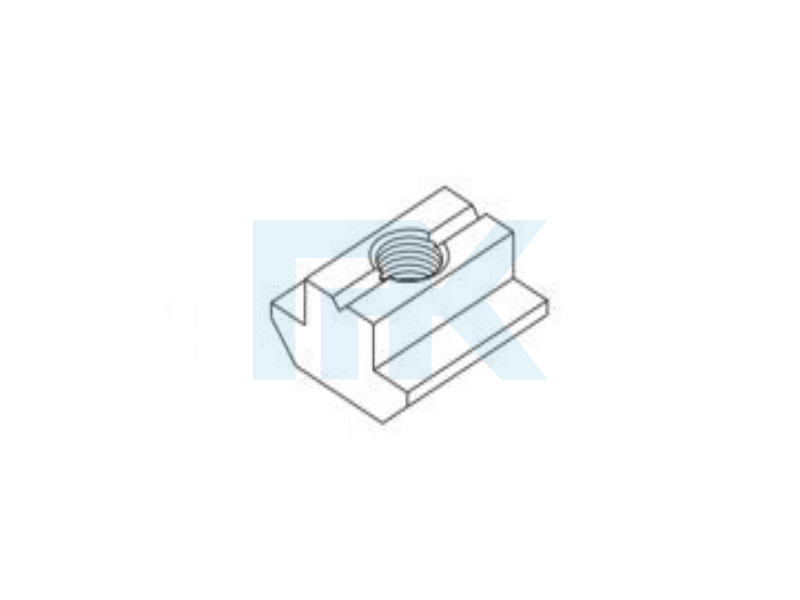 Aluminium Sliding Nut for Industrial T Slot Profile AssemblyCategory:T Slot FastenersView Product →
A sliding nut is still the cheapest reliable answer for a frame assembled on a bench. It costs less, it holds more thread length, and it cannot be knocked out of position while you are juggling a bracket in one hand.
When You Cannot Reach the End of the Profile
This is where roll-in fasteners earn their reputation. A closed frame, a repair on an installed machine guard, or a bracket that must go on after the panels are fixed in place all leave you with no open slot end to slide a nut from. A roll-in nut solves that in seconds: you push it in at the exact position you need, the springs hold it against the slot lips, and you can thread the bolt with one hand.
The trade-off is mechanical. A roll-in nut usually offers less thread engagement than a sliding nut of the same size, so it suits modest loads and works best with washers that spread the clamping force.
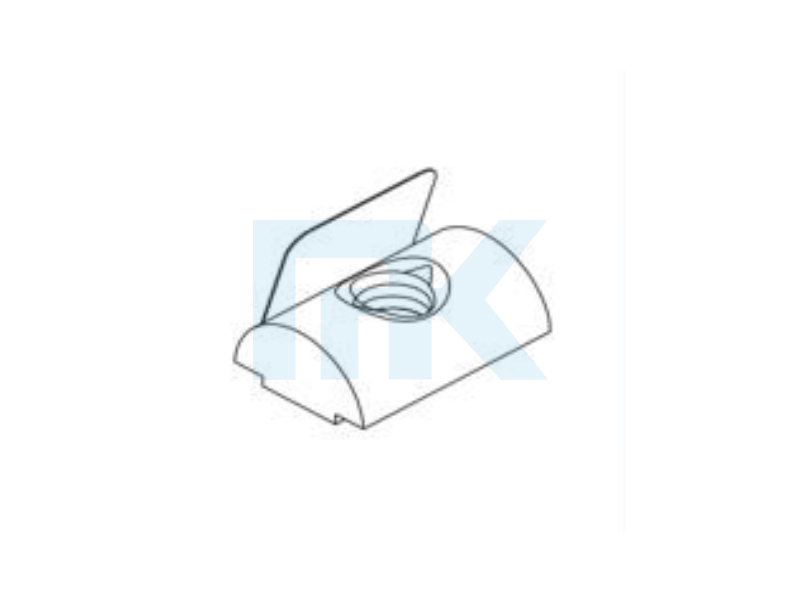 Stainless Steel Spring Leaf Roll-in Nut for T Slot Aluminium ProfileCategory:T Slot FastenersView Product →
Matching the Fastener to Your Profile, Not Just the Thread
Buying by thread size alone is the most common ordering mistake we see. "M8" tells you the bolt, not the slot. A nut that is correct for a 30 series profile will rattle or jam in a 45 series slot, even though both accept an M8 bolt.
Three dimensions decide whether a fastener will work:
- Slot width, which on aluminium profiles commonly falls into 6 mm, 8 mm and 10 mm families.
- Thread size, which sets the bolt you can use and the load the joint can carry.
- Coating thickness, which changes the effective dimensions of both the nut body and the thread.
That last point catches people out with hot dip galvanized parts. A thick zinc layer can add tens of microns to a face, so a nut that slides freely when plated may bind in a tight slot after galvanizing. If you are combining heavy coatings with a narrow slot, confirm the fit before buying in bulk and keep a slot width gauge on the bench. Our own range of T slot fasteners is organised so you can order by profile series and thread together.
Galvanized Steel or Stainless Steel?
Stainless is not a galvanized finish, but it is the alternative most buyers weigh against one. Both work in an aluminium frame, and both have a catch.
| Finish | Corrosion protection | Appearance | Where it fits best |
|---|---|---|---|
| Electroplated zinc | Moderate, good indoors | Bright and smooth | Workshops, enclosures, dry production areas |
| Hot dip galvanized | High, thick and sacrificial | Dull grey, slightly rough | Outdoor frames, wash-down, coastal sites |
| Zinc flake | High with a thin layer | Smooth, matte | High-strength bolts and tight tolerances |
| Stainless A2 or A4 | Very high | Bright and clean | Food, marine and chemically aggressive areas |
Zinc is a helpful partner for aluminium. On the galvanic series it sits closer to aluminium than bare steel does, so a galvanized fastener is generally gentler on the surrounding profile than a plain steel one. Stainless resists corrosion better as a metal, but in wet, salty conditions it can attack the aluminium around it. In those environments, use isolating washers and avoid trapping moisture in the slot.
Installation Habits That Keep Galvanized Joints Tight
Coating protects a fastener; it does not protect it from poor assembly. A few habits make a noticeable difference.
- Engage a full nut height of thread before applying load. Short engagement is the main cause of stripped threads in soft aluminium joints.
- Torque to the value your supplier publishes. Over-tightening crushes the slot lips and leaves a dent no nut will grip properly.
- Keep the slot clean. Zinc dust, swarf and dried coolant stop roll-in nuts from seating squarely.
- Use a washer under the bolt head when clamping sheet or plastic panels, so the load spreads across the slot.
- Check roll-in nuts after the first tightening. If the springs are not seated, the nut will rotate as you turn the bolt.
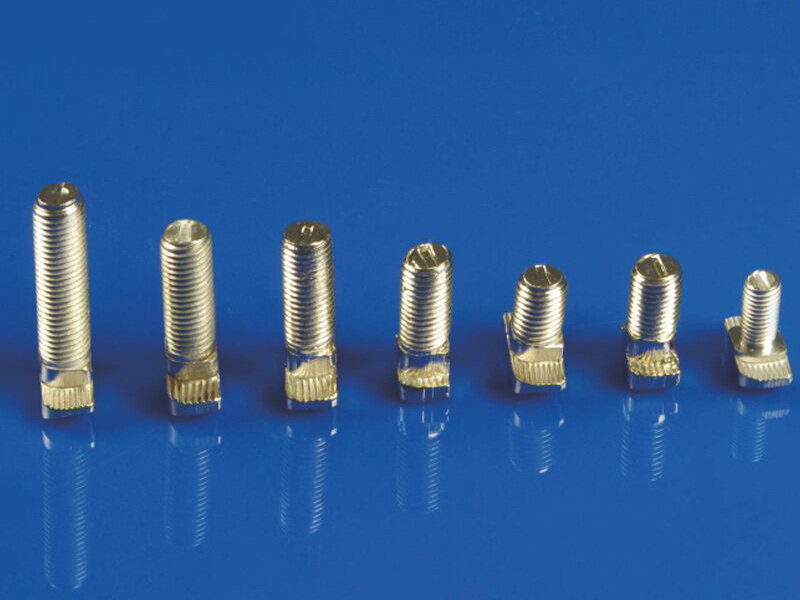 Aluminium Drop-in T Bolt for T Slot Profile FasteningCategory:T Slot FastenersView Product →
For panel mounting, a drop-in T bolt is often the tidier solution, because the head sits inside the slot and leaves the outer face of the frame flush.
Mistakes We Are Asked to Fix Most Often
Almost every loose frame that reaches our workshop comes down to one of four things. Fasteners were ordered by thread size without checking slot width. Galvanized and stainless parts were mixed in a damp environment without isolation. Nuts were reused after the springs had deformed. Or a joint was tightened until the slot lips bulged, which then let the whole assembly shift under vibration.
None of these are expensive to avoid. Order by series and thread, replace rather than reuse deformed nuts, and keep a torque wrench within reach of the assembly bench.
Galvanized T slot fasteners do not attract much attention, and that is exactly the point. Choose the right coating for the environment, match the nut to the slot rather than the thread alone, and tighten with a little restraint. A frame assembled that way will still come apart cleanly years later, which is the real test of a modular system. If you would like help matching fasteners to a specific MK profile series, our team is glad to check the details with you, and you can read more in our guide to picking galvanized T slot fasteners.